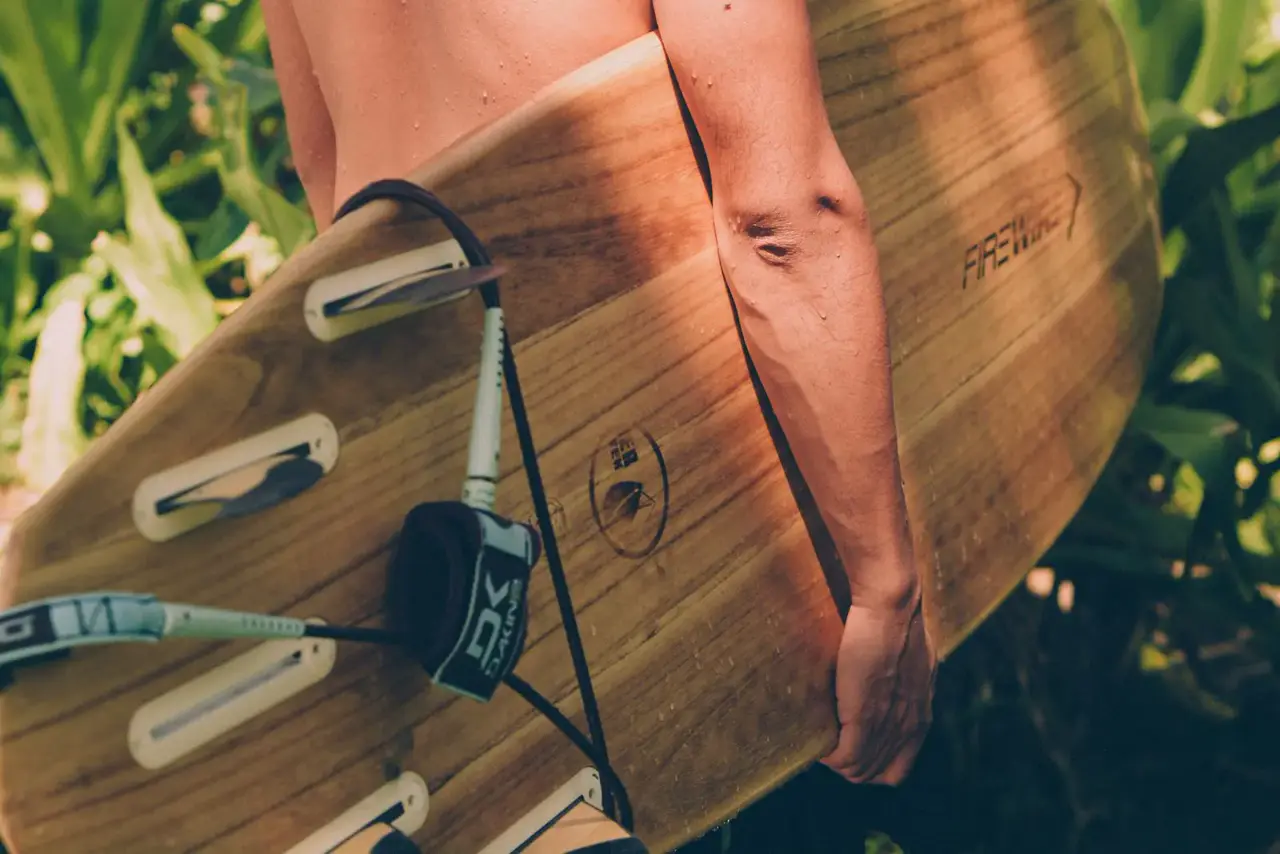
Surfboard tail with fins, a leash, and a traction pad
Pexels / 1753689
Surfboard Anatomy

Every Curve Has Purpose

Understanding the anatomy of a surfboard helps you choose better boards, communicate with shapers, and understand why boards feel the way they do.

Tap to Explore

Rocker

Click any hotspot to learn more

Nose

The front tip of the board that enters the water first.

Tail

The back of the board that releases water and controls turning.

Rails

The edges of the board that slice through the water.

Rocker

The curve of the board from nose to tail when viewed from the side.

Concave

Channels carved into the bottom that direct water flow.

Stringer

The wooden strip running down the center of traditional boards.

Fin System

Removable fins that provide direction, hold, and drive.

Deck

The top surface where you stand.

Outline

The template shape when viewed from above.

Foil / Thickness Flow

How thickness is distributed from nose to tail.

Key Takeaways

1

Volume matters most - It determines paddle power and wave-catching ability more than any other factor.

2

Rails are underrated - They affect forgiveness, speed, and control more than most surfers realize.

3

Rocker matches waves - More rocker for hollow waves, less for mushy waves. It's that simple.

4

Tail width = power handling - Narrow for power, wide for weak waves. Match your tail to your local conditions.

Ready to apply this knowledge?

Use our Board Finder to discover boards with the anatomy features that match your skill level and local conditions.

Gear

The tail hardware

Fins and a traction pad are the pieces you can change without reshaping the blank. Match the fin to the box.

Surfboard Life participates in the Amazon Associates Program. Links below are affiliate links: if you buy, we may earn a commission at no extra cost to you. We only link ASINs we checked, and we do not invent ratings. Affiliate disclosure.

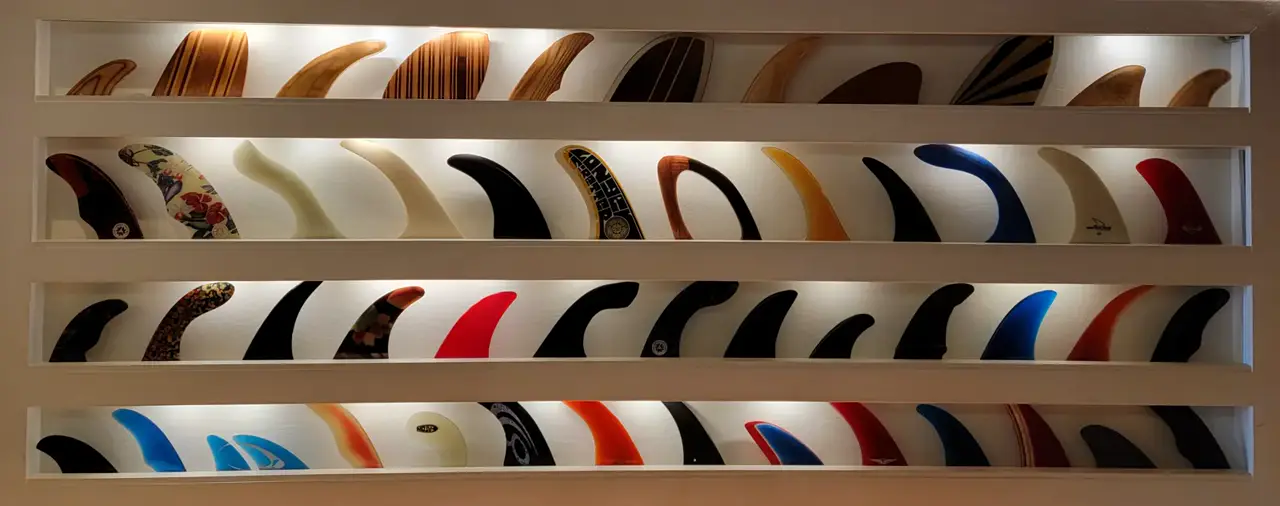
A display wall of surfboard fins. Illustrative photo, not the Futures listing image.

Futures

Futures Fins Legacy Series F8 Honeycomb Thruster

The F8 is a medium all-round thruster template. Honeycomb construction is lighter than a solid fiberglass fin of the same outline.

Worth knowing

  • Single-tab Futures box
  • Familiar all-round template
  • Honeycomb is lighter than solid glass

Limits

  • Fits Futures boxes only
  • Not a small-wave specialist
  • Colorways change

Verdict. A straightforward thruster set when the board already has Futures boxes and you want one everyday template.

Wikimedia Commons / Surfboard fins.jpg

View on Amazon
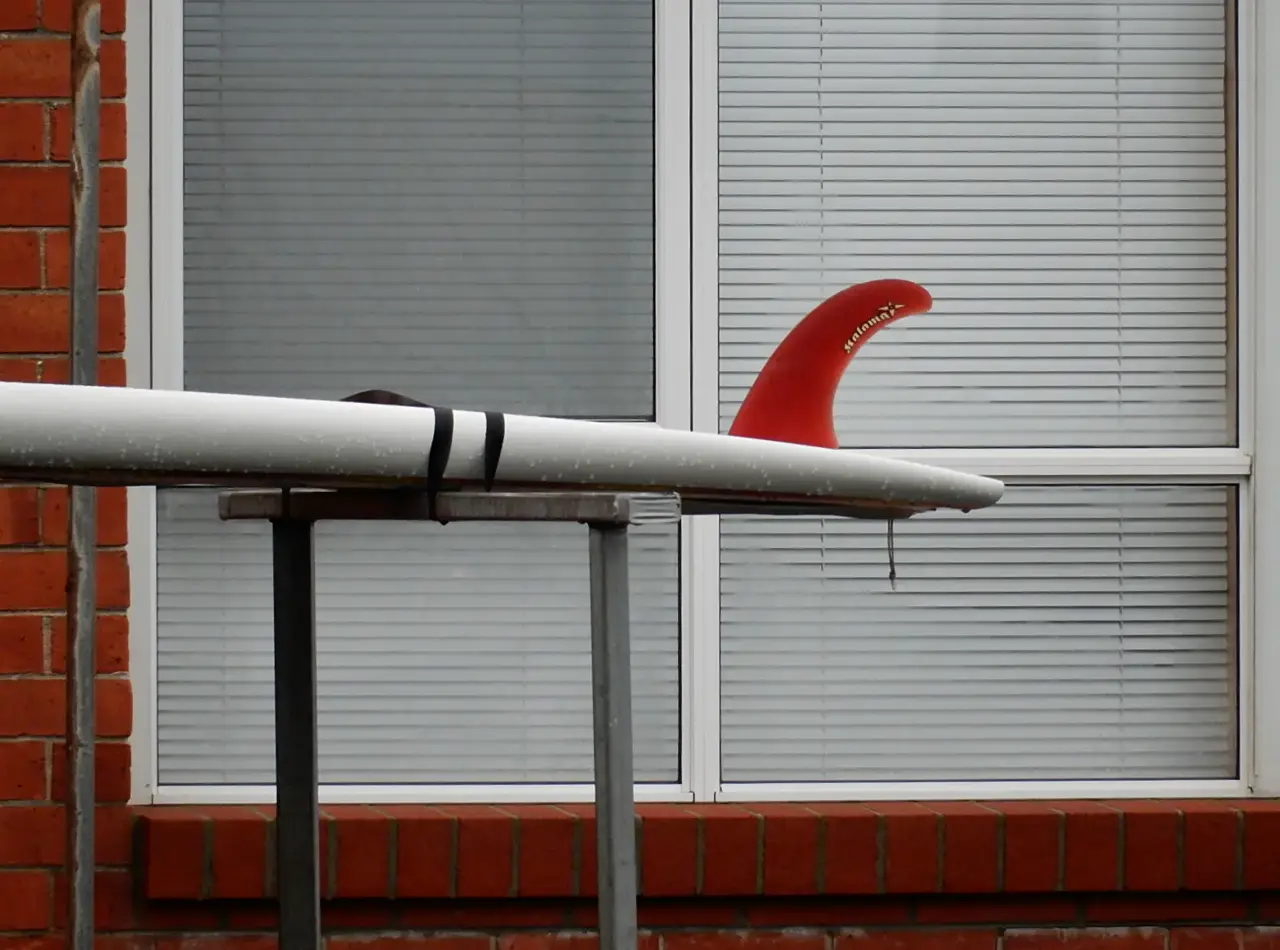
A single surfboard fin on a board. Illustrative photo, not the Futures listing image.

Futures

Futures F8 Legacy Thruster Fin Set Gray/Black

The same F8 thruster idea in a gray and black layup. Buy it as a spare color, not as a different fin.

Worth knowing

  • Futures single tab and screw
  • Same all-round template as the honeycomb F8

Limits

  • Does not fit FCS plugs
  • Overlaps the honeycomb F8 if you only need one set

Verdict. Choose this or the honeycomb F8, not both, unless you want a backup set.

Wikimedia Commons / Surfboard Fin

View on Amazon
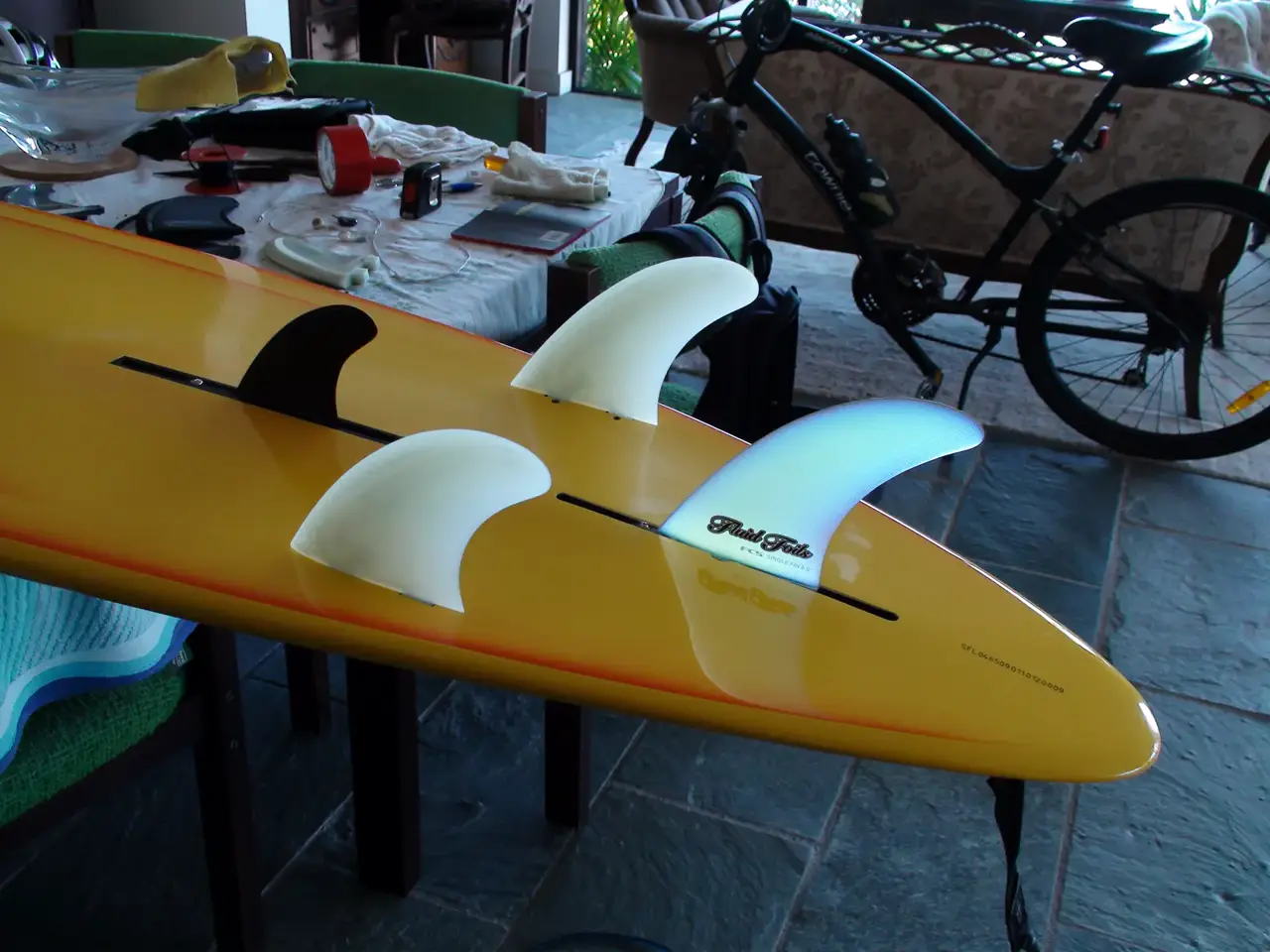
A quad fin layout on a surfboard. Illustrative photo, not the FCS Performer listing image.

FCS

FCS II Performer Tri Fin Set (Medium)

Performer is FCS's all-round thruster template. This listing is the medium set, and it clicks into FCS II plugs.

Worth knowing

  • Tool-free FCS II install
  • Medium template covers a lot of everyday boards

Limits

  • Will not fit Futures boxes
  • Click-in fins can feel looser than a screwed fin in heavy surf
  • Small and large are different ASINs

Verdict. The FCS-side all-round thruster, if the board has FCS II plugs. Match the size to the board.

Wikimedia Commons / Diamond Quad.jpg

View on Amazon
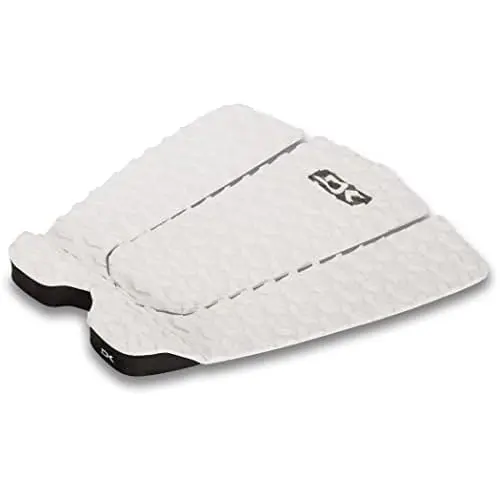
Dakine Andy Irons traction pad, the Amazon listing photo.

Dakine

Dakine Andy Irons Pro Surf Traction Pad

A three-piece tail pad adds grip where the back foot lands and keeps heels from denting the deck.

Worth knowing

  • Arch for the rear foot
  • Three-piece deck coverage
  • Amazon listing photo

Limits

  • One-shot adhesive
  • A pad on a foamie that already has deck skin is redundant

Verdict. For a hard board you want to lock a back foot onto. Skip it on a soft-top.

Amazon listing photo

View on Amazon
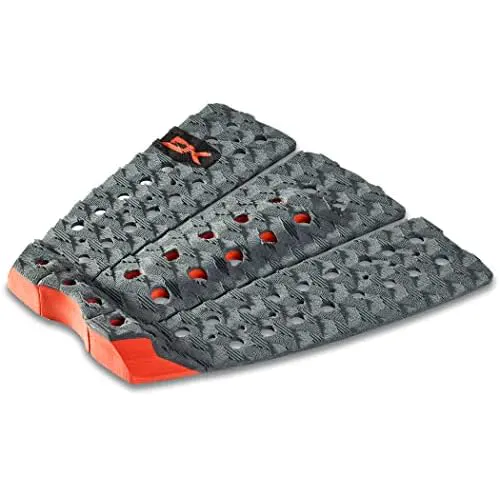
Dakine Launch traction pad, the Amazon listing photo.

Dakine

Dakine Launch Surf Traction Pad

A simpler three-piece tail pad than the Andy Irons model, with a flatter kick.

Worth knowing

  • Basic tail grip
  • Amazon listing photo

Limits

  • Less arch than the pro pad
  • Still the wrong add-on for a foamie

Verdict. A basic tail pad when you do not need the higher arch.

Amazon listing photo

View on Amazon