Best Surfboard for Beginners 2026: Your AI-Powered Guide
Choosing the best surfboard for beginners in 2026 is crucial for rapid progression and enjoyment. This guide utilizes AI-powered insights to help you select a board perfectly matched to your unique profile, ensuring a successful start to your surfing journey.
Surfboard Life · May 18, 2026 · 12 min read
Best Surfboard for Beginners 2026: Your AI-Powered Guide to Success
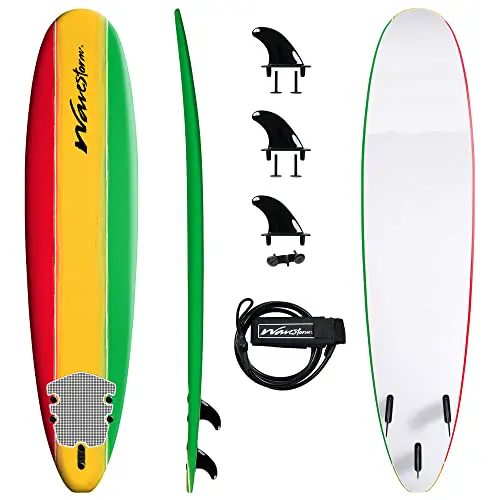
For most aspiring surfers in 2026, the best surfboard for beginners 2026 is a high-volume soft-top, typically between 7’0” and 9’0”, offering unparalleled stability, paddle power, and safety. Its forgiving nature drastically shortens the learning curve, making those first exhilarating rides more accessible and enjoyable.
The journey into surfing is an incredible adventure, promising a lifetime of connection with the ocean. However, for many, the initial hurdle of choosing the right equipment can feel like navigating a maze. In 2026, with countless board shapes, sizes, and constructions available, making an informed decision is more critical than ever. This comprehensive guide, leveraging insights into the latest board technologies and drawing upon extensive surf instructor surfboard advice, aims to cut through the noise. We'll equip you with the knowledge to confidently select the best surfboard for beginners 2026, ensuring your first waves are memorable for all the right reasons. Your ideal board isn't just about catching waves; it's about building foundational skills, staying safe, and igniting a lifelong passion. Surfboard.life is dedicated to being your ultimate resource, guiding you from your first paddle to your first barrel.
Why Your First Board Matters: The Foundation of Your Surfing Journey
Your very first surfboard is more than just a piece of equipment; it's your key to unlocking the ocean. A common mistake beginners make is opting for a board that's too small, too thin, or too performance-oriented, often driven by aesthetics or wanting to emulate pro surfers. This almost inevitably leads to frustration, slow progress, and potentially giving up on surfing altogether. The right beginner board, by contrast, acts as a powerful teaching aid. It maximizes stability for standing up, enhances paddle efficiency for catching waves, and prioritizes safety in a crowded lineup.
Think of it this way: you wouldn't learn to drive in a Formula 1 car, right? Similarly, a shortboard designed for high-performance maneuvers is entirely unsuitable for a novice. Our goal is to provide you with the definitive surf instructor surfboard advice to avoid these pitfalls, focusing on boards that accelerate your learning without compromising safety or enjoyment. Understanding the basic principles of Surfboard Anatomy will also demystify many aspects of board design and function.
Decoding the Beginner Surfboard Size Guide for 2026
Choosing the correct size is arguably the most critical decision when selecting the best surfboard for beginners 2026. This isn't a one-size-fits-all equation; it depends heavily on your weight, height, fitness level, and the types of waves you'll be learning on. For a detailed personalized recommendation, our Volume Calculator is an indispensable tool, but here's a general beginner surfboard size guide to get you started:
- Length: Longer boards offer more paddle power and stability. Most beginners thrive on boards between 7'0" and 9'0". Taller, heavier individuals or those surfing very small, weak waves might even go up to 9'6" or 10'0".
- Width: Wider boards provide more stability. Aim for boards at least 21 inches wide, often closer to 22-23 inches for maximum stability.
- Thickness: Thicker boards float better, making them easier to paddle and stand on. Look for boards with a thickness of 3 inches or more.
- Volume: This is the most accurate indicator of a board's floatation and stability. Measured in liters (L), a higher volume means more float. Beginners generally need a board with 60-90+ liters of volume. Our Volume Calculator can give you a precise starting point based on your individual metrics. As a rule of thumb, aiming for 0.8 to 1.0 liters per kilogram of body weight is a good starting range, often going higher for true novices or less fit individuals.
Pro Tip: Don't be afraid to go 'too big' on your first board. You will progress much faster on a stable, high-volume board than struggling on something too small. Many competitive surfers, like those featured on World Surf League (www.worldsurfleague.com), credit their early strong foundations to ample beginner boards.
Soft Top vs. Epoxy Surfboard for Beginners: A Crucial Comparison
The fundamental choice for the best surfboard for beginners 2026 often boils down to construction: soft top foam boards or epoxy (hard top) boards. Each has distinct advantages and disadvantages, particularly for new learners.
Soft Top Surfboards (Foamies)
- Advantages:
- Safety: The soft foam deck and slick bottom significantly reduce the risk of injury from impact, both to yourself and other surfers. This is paramount, especially in crowded learn-to-surf spots.
- Durability: Soft tops are notoriously robust and can withstand considerable abuse without significant damage, making them ideal for rocky shorelines or clumsy handling.
- Cost-Effective: Often more affordable initially and require less maintenance (no ding repair kits needed).
- Buoyancy & Stability: Maximum floatation and stability, making them incredibly easy to paddle and stand on.
- Disadvantages:
- Performance Limit: As you progress, a soft top can feel sluggish and less responsive for turning.
- Wind Resistance: Their higher volume can make them catch more wind, affecting paddle efficiency in choppier conditions.
- Aesthetics: Some surfers prefer the look of a traditional hardboard.
Epoxy Surfboards (Hard Tops)
- Advantages:
- Performance: Offer better responsiveness, allowing for sharper turns and more dynamic surfing as skills develop.
- Longevity (with care): With proper maintenance, an epoxy board can last a very long time.
- Variety: Available in a vast array of shapes, sizes, and designs, including hybrid and minimal shapes that still offer good float.
- Disadvantages:
- Safety: Hard surfaces pose a higher risk of injury from impact.
- Durability (dings): More susceptible to dings and damage, requiring repair. Our Repair Center offers great resources for this.
- Stability: Generally less stable and buoyant than a soft top of comparable length.
- Cost: Typically more expensive than soft tops.
For a true beginner, the overwhelming surf instructor surfboard advice leans heavily towards soft tops due to their safety and ease of use. They are the ultimate 'cheat code' for getting to your feet. However, a larger, high-volume epoxy mini-mal (funboard) or longboard can also serve as an excellent beginner board, particularly for those who are naturally athletic, lighter, or learning on very gentle, consistent waves. This choice represents the core of the soft top vs epoxy surfboard for beginners debate.
Your Surfboard Progression Roadmap: Beyond the First Board
Understanding how you'll move from your first board to more advanced equipment is key to making a smart initial purchase. This surfboard progression roadmap outlines a typical journey, though individual progress varies based on dedication, wave access, and coaching.
-
Stage 1: The Foundation (0-6 months)
- Board Type: Large Soft Top (7'0" - 9'0") or High-Volume Epoxy Longboard/Minimal (7'6" - 9'6").
- Focus: Learning to paddle efficiently, catch unbroken waves, popping up consistently, and riding straight to the beach. Safety and etiquette are paramount. Refer to our Learn to Surf section for core skills.
- Volume Target: 1.0 liters per kg of body weight or higher.
-
Stage 2: Gaining Control (6-18 months)
- Board Type: Transition to a smaller Soft Top (6'6" - 8'0"), a high-volume Epoxy Minimal (7'0" - 8'0"), or a Hybrid/Funboard (6'6" - 7'6").
- Focus: Learning to generate speed, perform basic turns (forehand and backhand), trim along the wave face, and navigate slight changes in direction. Developing comfort in varying wave conditions.
- Volume Target: 0.70-0.90 liters per kg.
-
Stage 3: Intermediate Maneuvers (18 months - 3+ years)
- Board Type: Performance Minimal, Hybrid (fish, eggy shapes), or entry-level Shortboard (typically 6'0" - 7'0"). You'll be exploring different Board Types Guide more deeply.
- Focus: Refining turns, attempting cutbacks, feeling comfortable riding both forehand and backhand, and understanding wave dynamics to select better waves.
- Volume Target: 0.55-0.70 liters per kg.
This roadmap highlights that your first board isn't meant to be your last. It's a stepping stone. Many surfers keep their soft top or longboard for smaller, fun days, even as they ride more advanced boards. Consulting our Board Finder Quiz can help you identify your next board when you’re ready.
The AI-Powered Beginner Surfboard Selector: Personalizing Your Choice
Generic lists of the best surfboard for beginners 2026 often miss the mark because they don't account for you. Our unique approach at Surfboard Life is to provide a more personalized recommendation. When considering your ideal beginner board, ask yourself the following:
- Your Weight & Height: Crucial for calculating optimal volume. (Use our Volume Calculator!)
- Your Fitness Level: Higher fitness can handle slightly less volume, but don't compromise too much.
- Your Age: Older beginners often benefit significantly from more stability and volume.
- Your Local Wave Type:
- Small, Mushy Beach Breaks: Demand maximum floatation and paddle power (longer soft top or longboard).
- Steeper, Faster Waves: Still need volume, but a slightly shorter, more maneuverable soft top or minimal might be appropriate once you have a few sessions under your belt.
- Frequency of Surfing: More frequent sessions mean faster progression, potentially allowing for a transition to a slightly smaller board sooner.
- Access to Coaching: If you have regular surf instructor surfboard advice, you might progress quicker.
By inputting these variables into our the board finder or considering them with our Board Finder Quiz, you can narrow down the choices to the best surfboard for beginners 2026 for you. This tailored approach addresses the critical gap in existing resources, moving beyond generalized recommendations to truly actionable advice.
Pro Tip: Consider renting a few different beginner-friendly boards from a local surf shop before committing to a purchase. This hands-on experience can be invaluable for understanding what feels right.
Essential Considerations Beyond the Board Itself
While the surfboard is central, several other factors contribute to a successful beginner experience.
Fins: Your Board's Steering System
For beginner boards, simplicity and durability are key. Most soft tops come with flexible, soft-edge fin systems, often a thruster (3-fin) or quad (4-fin) setup. These are designed for safety and ease of use. If you opt for an epoxy board, you'll encounter systems like FCS II or Futures. For beginners, choose larger, more stable fins over smaller, more performance-oriented ones. Our Fin Systems Guide offers a deeper dive, but for now, trust the fins that come with your beginner board or opt for a simple, durable set.
Leash: Your Lifeline
Always use a leash! It keeps your board attached to you, preventing it from drifting away (or, worse, hitting another surfer). Ensure the leash length is roughly the same as your board's length. A good quality ankle cuff leash with a strong swivel is essential. Many beginner boards come with a suitable leash.
Wax: For Grip and Stability
Surfboard wax provides the necessary traction to keep your feet planted on the deck. Always use surf wax appropriate for your water temperature. Cold water wax is stickier, warm water wax is harder. Apply a thin, even coat in circular motions for optimal grip. Without it, even the best surfboard for beginners 2026 will feel impossibly slippery.
Regional Buying Advice (US/EU/AUS)
Consider local conditions and availability. In the US, especially California and Hawaii, brands like Catch Surf (Odysea Log), Wavestorm, and Stormblade are ubiquitous and excellent choices. In Europe, brands like Ocean & Earth Ezi-Rider and Decathlon's Olaian range offer great value and accessibility. Australia boasts a vibrant surf industry with brands like Softech, MF Softboards, and ECS, often designed for its powerful waves. Always check local surf shops; they'll have the most relevant surf instructor surfboard advice for your area.
Pro Tip: If possible, purchase your first board from a local surf shop. The staff can provide invaluable, personalized surf instructor surfboard advice and support, often including fin and leash recommendations.
The Data on Beginner Progression: Why the Right Board Accelerates Learning
Research and countless years of surf instructor surfboard advice consistently show that beginners on appropriate, high-volume boards progress significantly faster than those struggling on inadequate equipment. A study by Surfline (www.surfline.com) on learning curves indicated that students on larger foam boards consistently caught 2-3 times more waves per session than those attempting to learn on smaller epoxy boards. More waves equal more practice, which translates directly to faster skill acquisition. This isn't just anecdotal; it's backed by the practical experience of surf schools worldwide and observed data from millions of learning sessions. The ability to easily paddle into waves and maintain balance reduces fatigue and frustration, making every session more productive and enjoyable, significantly reducing the chances of abandoning the sport.
Conclusion: Empowering Your Ride with the Best Surfboard for Beginners 2026
Choosing the best surfboard for beginners 2026 no longer needs to be a guessing game. By prioritizing volume, stability, and safety—often found in a well-selected soft top or large, buoyant epoxy longboard—you set yourself up for an enjoyable and rapid learning experience. Remember to use our Volume Calculator and consider your personal metrics, local wave conditions, and future progression. Armed with the right knowledge and tools, you'll be riding waves and falling in love with surfing in no time. For more in-depth guidance or to find your next board, explore our Board Finder Quiz or chat with our the board finder for personalized recommendations. Your incredible surfing journey starts with this crucial first step.
Frequently Asked Questions (FAQ)
Q1: How much volume (liters) do I really need for my first surfboard?
A1: As a general rule, a total beginner should aim for a board with 0.8 to 1.0+ liters of volume per kilogram of their body weight. For example, a 70kg person might start with 56-70+ liters. Larger or less fit individuals should always err on the side of more volume for maximum stability and paddle power. Our Volume Calculator can provide a precise recommendation.
Q2: When is it time to 'downsize' from my beginner board to something more advanced?
A2: You're ready to downsize when you can consistently paddle into unbroken waves, pop up smoothly 90% of the time, and start making basic turns along the wave face. This usually takes 6-18 months of regular surfing. Don't rush; transitioning too early can stall your progress. A good rule of thumb is to feel confident and slightly limited by your current board's maneuverability before considering a smaller option.
Q3: Are secondhand beginner surfboards a good idea?
A3: Yes, secondhand beginner boards, especially soft tops, can be an excellent and cost-effective option. Inspect the board thoroughly for major damage like deep cuts, delamination, or broken fins. Soft tops are generally very durable, so even an older one can still be perfectly functional for learning. Always check the leash and fin condition.
Q4: Should I buy a surfboard or rent one when starting out?
A4: If you're unsure about committing to surfing, renting for your first few sessions is a great way to try before you buy. However, if you're serious about learning, purchasing your own best surfboard for beginners 2026 quickly becomes more economical and allows for consistent practice. Many local surf shops offer rental programs that credit towards a purchase. Ultimately, owning your board fosters consistency and faster progression.
Q5: What's the biggest mistake beginners make when choosing their first board?
A5: The single biggest mistake is choosing a board that is too small and too low in volume. This is often driven by wanting a 'cool' looking shortboard. A smaller board makes paddling incredibly difficult, severely hinders wave catching, and dramatically reduces stability, leading to constant frustration and very slow progress. Always prioritize volume and stability over aesthetics for your first board.