Best Surfboards for California Waves: Complete Guide
Discover the best surfboards for California waves with our regional quiver breakdown. From San Diego beach breaks to Santa Cruz point breaks, find your ideal board.
Surfboard Life · October 20, 2026 · 12 min read
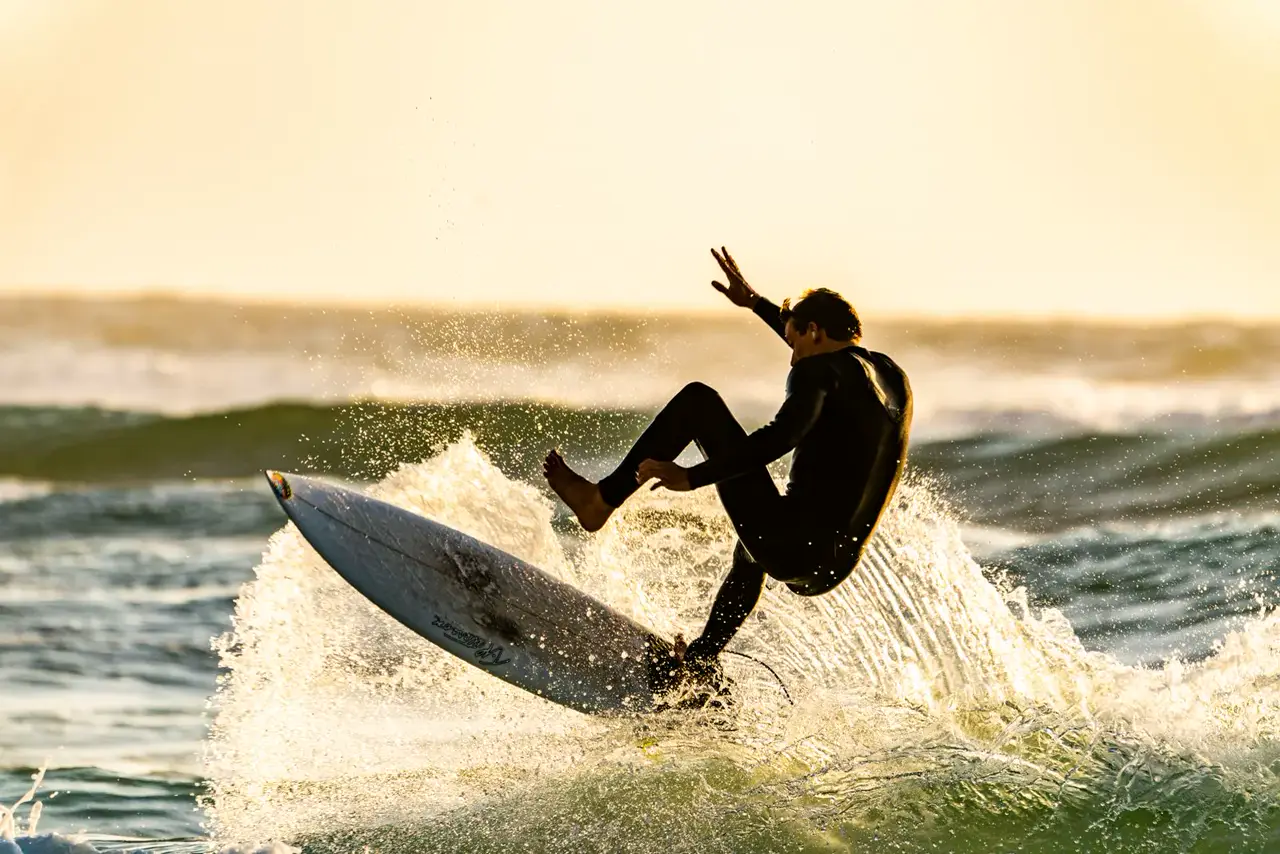
The best surfboards for California waves are versatile shapes that accommodate shifting tides, soft wave faces, and seasonal swells. For most surfers, an everyday quiver consists of a wide-tailed fish or groveler for soft summer beach breaks, a balanced performance hybrid or mid-length for classic point breaks, and a rounded-pin step-up for heavy winter swells.
California features over 840 miles of diverse coastline. A single afternoon can offer everything from punchy, hollow sandbars at Newport Beach to wrapping, peeling cobblestone rights at Rincon. Because the Golden State's surf changes dramatically across seasons and regions, riding the wrong board leads to frustrating sessions, missed sections, and sluggish paddle power. Whether you are navigating mushy summer south swells or chasing overhead winter northwest lines, having the right stick under your feet is essential.
In this comprehensive California surfboard buying guide, we break down regional wave characteristics, outline the exact dimensions you need, analyze board construction for cold water, and map out the ultimate California quiver.
California Surfboard Buying Guide: Understanding Golden State Swells
To choose the right board, you must first understand California’s unique oceanography. Unlike shallow tropical reef passes that produce mechanical, top-to-bottom barrels, California surf is dynamic, tide-sensitive, and heavily influenced by regional bathymetry.
Two primary swell regimes dictate conditions:
- South Swells (May to September): Generated by Southern Hemisphere winter storms, these long-period swells (16–22 seconds) light up south-facing beaches and points like Lowers Trestles and Malibu. Summer waves often feature long, rippable walls, though mornings can be plagued by coastal eddies and afternoon onshore winds.
- Northwest Swells (October to April): Sourced from the North Pacific and Gulf of Alaska, these shorter-to-medium-period swells (12–17 seconds) collide with west- and northwest-facing breaks. Winter delivers heavier, colder, and significantly more powerful waves from Ocean Beach down through San Diego.
Water temperature also influences board performance. Winter water dips to 50°F (10°C) in Central California and mid-50s in Southern California, requiring a 4/3mm or 5/4mm hooded wetsuit. As documented in forecasting reports from Surfline, cold water is denser, and wearing 6 to 10 pounds of wet neoprene reduces your buoyancy and shoulder endurance. Dialing in your foam volume is essential—use our interactive Volume Calculator to factor in your wetsuit thickness, weight, and fitness level.
California Swell Cycle:
Summer (S/SW Swells)  --> 2-4ft Softer Peels  --> Fish, Grovelers, Mid-Lengths
Winter (NW/W Swells)  --> 4-8ft+ Heavy Punch --> All-Rounders, Performance Steps
Best Surfboards for California Waves by Coastal Region
California cannot be treated as a single surf spot. A board that flies through the flat sections at San Onofre will bog down on a steep drop at Steamer Lane. Let's examine the top regional demands across the state.
1. San Diego County: Reefs, Cobblestone, and Beach Bars
From the punchy beach breaks of Black’s to the reef ledges of Sunset Cliffs and Bird Rock, San Diego offers high variety in a tight corridor. San Diego beach breaks demand quick acceleration to clear closeout sections, while reefs provide tapered walls for rail work.
- Ideal Setup: A modern fish with twin fins or a hybrid quad shortboard.
- Key Dimensions: Slightly wider nose outline, medium rocker, and generous width through the center to plane across softer reef transitions.
2. Orange County: Hollow Jetties and High-Performance Points
Orange County is the epicenter of modern high-performance surfing. Spots like Huntington Beach Pier and Newport Beach 54th Street deliver fast, shifting beach peaks, while Lower Trestles serves up world-class canvas walls, as showcased during the Rip Curl WSL Finals by the World Surf League.
- Ideal Setup: A high-performance shortboard (HPSB) for clean days, paired with an aggressive squash-tail small-wave groveler for daily beach breaks.
- Key Dimensions: Moderate continuous rocker, single-to-double concave, and refined rails that bite into steep pocket transitions.
3. Los Angeles & Ventura: Sand Points and Classic Rollers
Ventura County delivers cobblestone points with Rincon, C-Street, and Emma Wood, while Los Angeles features gentler, rolling surf at Malibu and El Porto's heavy beach-break shorepound.
- Ideal Setup: A 6'6" to 7'6" performance mid-length or classic egg shape. Mid-lengths excel on Malibu’s softer shoulders and let you connect sections at First, Second, and Third points without losing momentum.
- Key Dimensions: Low entry rocker, rolled vee to double concave, and neutral rails.
4. Santa Cruz & Central Coast: Cold Water Ripping
Santa Cruz is famous for right-hand point breaks wrapping into kelp-lined coves, such as Pleasure Point and Steamer Lane. The water is colder, the waves are thicker, and priority crowds are fierce.
- Ideal Setup: A durable round-tail performance hybrid or high-volume shortboard.
- Key Dimensions: Increased thickness under the chest (+1–2 liters over your warm-water standard) and sharp tail rails to maintain drive through thick chop.
5. Northern California (SF to Humboldt): Raw Ocean Power
San Francisco’s Ocean Beach is one of the world's most demanding beach breaks, featuring shifting sandbars, heavy rip currents, and massive offshore paddling distances. Further north, raw energy meets open ocean reefs.
- Ideal Setup: A dedicated step-up (6'4"–7'2") with a rounded pin tail and quad fin option for holding a line in dredging barrels.
- Key Dimensions: Heavy glassing, lower rails, drawn-in tail, and substantial nose rocker to handle late, ledge-heavy drops.
Pro Tip: If you surf both Southern and Northern California, never use your sub-30-liter SoCal summer beach groveler at winter Ocean Beach. Paddling against offshore winds and multi-directional rip currents requires at least 3 to 5 extra liters of volume to prevent exhaustion and avoid dangerous hold-downs.
Sizing a Surfboard for California Beach Breaks vs Point Breaks
Selecting a surfboard for California beach breaks requires a completely different design approach than building a board for classic point breaks. Understanding how wave shape interacts with surfboard geometry makes your sessions far more productive.
Beach Breaks vs. Point Breaks:
Beach Breaks: Shifting peaks -> Flat entry rocker + Wide tail (Instant speed)
Point Breaks: Long peeling walls -> Continuous rocker + Refined tail (Hold & Carving)
The Beach Break Blueprint
California beach breaks—such as Ocean Beach, Manhattan Beach, and Bolsa Chica—break abruptly over shallow sandbars. Peaks shift constantly, and sections close out quickly.
When shopping for a surfboard for California beach breaks, look for:
- Flatter Entry Rocker: Minimizes drag, allowing you to catch fast-moving, shifty waves early.
- Wider Squash or Swallow Tail: Provides an immediate burst of planning speed so you can pump around closing shorebreaks.
- Single Concave Bottom: Produces maximum lift and drive off the bottom.
To discover how various tails and bottoms affect maneuverability, explore our guide to Surfboard Anatomy.
The Point Break Blueprint
Point breaks like Rincon, Swamis, and Pleasure Point peel predictably along a shoreline or headland. You do not need instant acceleration off the drop; instead, you need projection down the line and continuous rail-to-rail control over 100-to-200-yard rides.
For points, your board needs:
- Continuous Curvature (Rocker): Fits into the curved pocket of the wave without catching the nose.
- Round or Pin Tail: Provides smooth transitions from turn to turn and prevents blowing out your fins at top speed.
- Medium to Low Rails: Bites deeply into the face for long, sustained cutbacks.
Pro Tip: Tail design determines how water releases from your board. For steep beach break dumpers, choose a wide squash for lift; for point break walls, choose a rounded pin for holding power through high-speed carves.
Conquering Mush: Choosing a Surfboard for Small California Waves
Between June and August, California's coast often experiences extended flat spells punctuated by soft, waist-high summer windswell. Trying to ride a razor-thin, rockered-out shortboard in these conditions leads to bogging, stalling, and frustration.
To maximize your wave count, you need a specialized surfboard for small California waves—commonly referred to as a "groveler" or modern fish.
Key traits of an effective small-wave California shape include:
- High Volume-to-Length Ratio: Packing 35–45+ liters into a board under 5'10" creates effortless planning across wave flats.
- Flat Rocker Profile: Minimal nose and tail rocker maximize the surface area in contact with the water, translating every drop of wave energy into forward motion.
- Parallel Rail Line: Straight, parallel outlines generate instant down-the-line speed without requiring intense pumping.
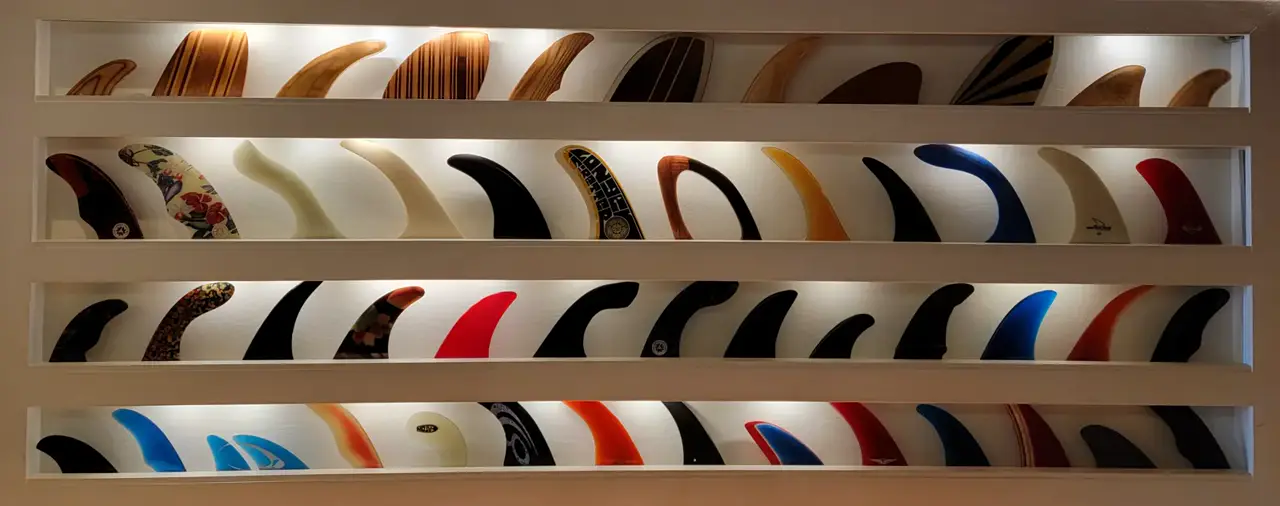
- Twin Fin or Keel Fin Setup: Twin fins produce far less drag than traditional thrusters, allowing the board to skate through weak, gutless white water. Learn how to configure your tabs in our Fin Systems Guide.
If you want to discover the right board category for your surfing style, take our interactive Board Finder Quiz or browse our extensive Board Types Guide.
Construction Matters: PU vs. Epoxy in Cold Pacific Waters
When buying California wave specific surfboards, board construction plays a critical role in performance and longevity.
Construction Comparison:
PU / Polyurethane: Heavy, damp, cuts through afternoon coastal chop. Best for winter.
EPS / Epoxy: Light, buoyant, ultra-responsive on weak, soft wave faces. Best for summer.
Soft-Top Foam: Indestructible, high-buoyancy, stress-free for crowded point breaks.
1. Traditional Polyurethane (PU) with Polyester Resin
PU is the traditional standard for California surfing. Polyurethane blanks have a natural dampening effect, which means they absorb the chatter and bump common to California afternoons when sea breezes create choppy surfaces. PU cuts smoothly through heavy Pacific chop and offers an authentic flex pattern preferred by purists.
2. Expanded Polystyrene (EPS) with Epoxy Resin
EPS foam is lighter and contains more trapped air than PU, resulting in roughly 5–10% more buoyancy for the exact same volume. This makes epoxy boards ideal as a surfboard for small California waves, where you need every drop of lift to skim through soft sections. However, in heavy winter conditions or strong winds, epoxy boards can feel overly skittery and buoyant on bumpy drops.
3. Soft-Tops and Foamies
High-performance soft-tops are no longer just for learners. Top shapers now produce technical fish and shortboard designs with soft decks and rigid internal stringers. At hyper-crowded spots like San Onofre or Doheny, a soft-top provides maximum safety, ding resistance, and fun. If you are just starting out, check out our Learn to Surf resources.
If your board sustains dings or rail cracks on California's rocky reef entries, consult our Repair Center for step-by-step DIY fixing techniques.
California Wave Specific Surfboards: The Ideal Multi-Board Quiver
Can one single board handle every California break year-round? While a versatile 5-fin hybrid shortboard or a 7'0" egg comes close, relying on a single board forces compromises during flat summer days and firing winter swells.
Here is how experienced shapers and seasoned locals structure their California quivers:
The California Quiver Matrix
| Quiver Slot | Recommended Board Shape | Ideal Wave Size | Best California Breaks | Construction Recommendation | | :--- | :--- | :--- | :--- | :--- | | The Groveler / Fish | 5'4" – 5'10" Retro Twin or Modern Wide-Tail Groveler | 1 – 3 ft (Ankle to Waist) | Huntington Cliffs, San Onofre, Cardiff Reef, El Porto | EPS / Epoxy (maximum float and speed) | | The Daily Driver | 5'10" – 6'2" Performance Hybrid / Squash Tail | 3 – 5 ft (Chest to Head-High) | Lower Trestles, Swamis, Upper Trestles, Salt Creek | PU / Poly (smooth rail control) | | The Mid-Length | 6'8" – 7'6" Round Egg or Glider | 2 – 6 ft (Knee to Overhead) | Malibu, Rincon, Tourmaline, Cowell’s | PU or High-Density EPS (classic glide) | | The Winter Step-Up | 6'4" – 7'0" Rounded Pin / Quad Fin | 6 – 10 ft+ (Double Overhead) | Ocean Beach SF, Steamer Lane, Black's Beach | Heavy PU Glassing (6+4 oz deck for chop dampening) |
Surfers looking for historical context on how these designs developed along the Pacific coastline can explore our dive into Surfing History, tracing how 1960s Malibu chip boards evolved into modern high-performance thrusters.
Pro Tip: If you can only afford a two-board quiver for California, invest in a 5'8" Twin Fin Fish (for 1–3 ft mush) and a 6'1" Rounded-Squash Performance Hybrid (for 3–6 ft daily waves). This combination covers 85% of surfable days from San Diego to Point Conception.
Dialing In Your California Board Dimensions: Sizing Strategy
Selecting your board size requires balancing your body weight, surfing ability, age, and winter wetsuit weight.
Step 1: Adjust for the "Neoprene Penalty"
Surfing in a 4/3mm wetsuit, booties, and a hood adds significant weight and restricts shoulder mobility. When ordering a custom or off-the-rack board for Northern or Central California winter swells, add 1.5 to 3 liters of volume over your warm-water or Southern California summer specs. Editorial gear testing by publications like Stab Magazine routinely underscores that under-volumed boards in cold water cause premature paddling fatigue.
Step 2: Match Rocker to Local Bathymetry
- Steep beach breaks (Newport, Black's, Manhattan Beach): Add flip to the nose and tail to avoid pearling on steep drops.
- Flat-faced points (Malibu, San Onofre, Leadbetter): Keep the rocker flat to maintain glide across dead sections without having to pump vigorously.
Step 3: Choose the Right Fin Configuration
- Thruster (3 Fins): Offers maximum pivot in the pocket and predictability when carving hard off the top at punchy beach breaks.
- Quad (4 Fins): Generates superior down-the-line speed and holds high lines in steep, hollow barrels at spots like Ocean Beach and Black’s.
- Twin Keel (2 Fins): Loosens up small, flat waves and lets you skate past mushy sections at cobblestone points.
Still unsure which volume and rocker profile match your local break? Ask our free the board finder for personalized, real-time gear recommendations.
Frequently Asked Questions About California Surfboards
What is the single best all-around surfboard for California waves?
The most versatile board for California is a performance hybrid shortboard or a performance mid-length (6'6" to 7'0"). A hybrid with a five-fin setup allows you to switch between a thruster for beach breaks and a quad for flatter point breaks, handling waves from waist-high to slightly overhead.
Do I need a step-up surfboard for California winters?
Yes, if you plan to surf premier winter spots like Black's Beach in San Diego, Steamer Lane in Santa Cruz, or Ocean Beach in San Francisco. Winter Pacific swells frequently push past double-overhead, requiring a 6'4" to 7'0" board with a drawn-in round pin tail to paddle into fast-moving swells and hold your rail on steep faces.
Is an epoxy surfboard good for California beach breaks?
Epoxy boards work exceptionally well in California beach breaks, especially on small to medium days. The natural buoyancy of EPS foam helps you accelerate quickly across flat sandbar sections and generate pop for air maneuvers. However, for windy winter afternoons, standard PU boards handle bumpy chop better.
How much volume should I add to my board for California winter surfing?
Most surfers should add roughly 1.5 to 3 liters of volume to their boards for winter conditions. Cold water reduces buoyancy, and wearing a 4/3mm or 5/4mm wetsuit with booties adds 6 to 10 pounds of wet weight while fatiguing your paddling muscles faster.
Why are twin fin fish boards so popular in Southern California?
Twin fin fish shapes feature flat rocker, wide tails, and lack a dragging center fin. This design generates effortless speed across flat, mushy shoulders, making them ideal for Southern California's soft summer swells, high-tide reef breaks, and gentle point waves.