Best Surfboard for Knee High Waves: Maximize Your Fun
Discovering the best surfboard for knee high waves is crucial for maximizing your wave count and overall enjoyment in small surf. This guide provides data-driven recommendations, ensuring you find the perfect board to excel in truly weak conditions, whether you're a beginner or an experienced shortboarder. Get ready to transform your tiny wave sessions!
Surfboard Life · August 3, 2026 · 13 min read
For maximizing wave count and fun in consistently knee-high, weak beachbreak, the single most effective board type is typically a high-volume groveler or a well-chosen longboard. These boards, characterized by their increased flotation and flatter rockers, offer superior paddling efficiency and early wave entry, making them the best surfboard for knee high waves.
Surfing truly knee-high waves – those 0-2 foot ripples that often get overlooked – requires a specialized approach to equipment. Most surf guides lump knee-high into a broader “small wave” category, diluting the specific advice needed for these anemic conditions. At Surfboard Life, we recognize that mastering the art of riding micro-waves is a unique skill that demands the right craft. This comprehensive guide will arm you with the knowledge to pick the best surfboard for knee high waves, tailored to your experience level, body type, and local break. Forget sitting on the sidelines; it's time to turn tiny swells into pure stoke.
Understanding Knee-High Waves: Why They Demand a Special Board
Knee-high waves (roughly 0-2 feet face height) are defined by their lack of power, slow speed, and often short ride duration. Unlike chest-high or head-high surf, these waves don't provide much push, requiring surfers to generate their own speed and momentum. This is where your board choice becomes paramount. A standard shortboard, designed for powerful, steeper waves, will feel like a brick, hindering paddle speed and wave entry. You'll spend more time flailing and less time riding.
To effectively surf these conditions, you need a board that excels in three key areas:
- Paddling Efficiency: The ability to catch waves early and easily, minimizing effort.
- Wave Catching Threshold: A design that allows you to take off on the weakest, slowest moving bumps.
- Speed Generation: Once on the wave, the board must be able to maintain and generate speed across the flat sections.
Ignoring these factors when selecting a board for knee-high surf is a common mistake that leads to frustration. An experienced shaper once told us, "The right board in small waves isn't just about catching more waves; it's about making those waves feel bigger and more alive." This philosophy is at the core of finding the best surfboard for knee high waves.
The Anatomy of a High-Performance Knee-High Surfboard
What design elements make a board exceptional in tiny surf? It's a combination of factors working in harmony to counteract the wave's lack of power. Understanding these features will empower you to identify the ideal board, whether it's a specific model or a custom shape.
Volume: Your Best Friend in Weak Waves
Volume, measured in liters, is arguably the most critical factor for knee-high surf. More volume equates to more flotation, which directly translates to easier paddling and earlier wave entry. For knee-high conditions, you should be looking for a board with significantly more volume than your standard shortboard. Many surfers find adding 5-10 liters (or even more for beginners) to their typical volume sweet spot is ideal. Use our Volume Calculator to get a starting point, then factor in the small-wave conditions.
Pro Tip: Don't be afraid to go too high on volume for knee-high waves. The goal is maximum wave count and glide. You can always size down a bit as your skill in micro-surf improves.
Outline: Wide and Stable
Boards designed for small waves typically feature wider outlines, especially in the nose and tail. This increased surface area contributes to stability and lift, helping the board plane easily on slow-moving water. A wider nose provides extra paddle power, while a wider tail gives you a stable platform for turns and allows for quicker planing. Fish shapes and hybrid grovelers often exemplify this design principle.
Rocker: Flat is Where It's At
Rocker refers to the curve of the board from nose to tail. In knee-high waves, a flatter rocker is essential. A flatter board makes contact with more of the wave's surface, reducing drag and increasing speed. It also allows for easier paddling and maintains momentum through flatter sections. Boards with too much nose or tail rocker will bog down in weak surf.
Bottom Contours & Rails: Generating Lift and Flow
- Single to Double Concave: Many small-wave boards feature a single concave under the front foot for lift and speed, transitioning to a double concave through the fins for easy rail-to-rail transitions. Some grovelers might even incorporate a subtle vee in the tail for easier turning on flat sections.
- Fuller Rails: Thicker, more forgiving rails provide extra flotation and are less likely to catch in chop, making them ideal for navigating the unpredictable surfaces of knee-high waves. They also offer a more stable feel underfoot.
Fin Setups: Drive and Release
While personal preference plays a role, common fin setups for knee-high surf include:
- Twin Fin: Offers immense speed, pivot, and a lively feel, perfect for generating speed on small waves. Ideal for fun, carvy surfing.
- Quad Fin: Provides speed and drive like a twin, but with more hold and control, especially through turns. A great option for maintaining speed in longer, softer waves.
- Thruster (3-fin): While classic, if choosing a thruster for knee-high, look for fins with a larger base and less rake to maximize drive and projection. Our Fin Systems Guide offers a deeper dive into fin choices.
Knee High Surfboard Recommendations by Surfer Type
The best surfboard for knee high waves isn't a one-size-fits-all solution. Your skill level, physical attributes, and desired surfing style all play a crucial role in the selection process. Here are tailored recommendations for various surfer archetypes:
1. Small Wave Surfboard for Beginner (or Very Casual Surfer)
For those just starting out or surfers who prioritize maximum wave count and ease of surfing above all else, the choice is clear: a longboard or a large, high-volume foam board.
- Why a Longboard? Nothing beats a longboard (9'0"+) for sheer paddle power and stability in knee-high waves. They catch the smallest ripples with minimal effort, offering extended glides and a gentle learning curve. They provide the ultimate high volume surfboard for small surf. For an absolute beginner learning the ropes, a longboard is foundational. You can walk the board, cross-step, and learn the fundamentals of trimming and turning without battling for speed. A typical 9'0" longboard offers 70-90+ liters of volume.
- Recommended Dimensions: 9'0" - 10'0" x 22" - 24" x 3" - 3.5"
- Pros: Unbeatable wave count, easy paddling, stable platform, long rides. Fantastic for learning fundamentals (refer to our Learn to Surf section).
- Cons: Less maneuverable, difficult to transport and store.
2. The Intermediate Shortboarder Seeking a Groveler
If you're an experienced shortboarder who finds yourself in knee-high waves frequently and wants to maintain a performance-oriented feel, a specialized groveler is your weapon of choice. This is where most of our knee high surfboard recommendations will focus.
- Why a Groveler? Grovelers are purpose-built to extract maximum fun and performance from weak conditions. They typically feature wider noses, flatter rockers, fuller rails, and generous volume, all compressed into a shorter, more agile package (typically 5'0"-6'0"). They are designed to be the best surfboard for knee high waves when you want to turn and generate speed proactively. They offer the perfect balance of wave-catching ability and maneuverability.
- Recommended Dimensions: Depending on your weight and skill, aim for 2-5 inches shorter than your standard shortboard, with 5-10 liters more volume. For example, a 160lb surfer might ride a 5'6" x 20" x 2.5" groveler with 32-35L of volume (compared to a 5'9" x 18.5" x 2.25" shortboard at 26-28L).
- Pros: Excellent speed generation, agile, allows for performance turns in small waves. A true groveler for weak waves.
- Cons: Not as easy to paddle as a longboard, can feel sluggish in larger, more powerful surf.
3. The Heavier or Older Surfer (or Those with Less Paddle Power)
For surfers who might need a little extra help catching waves due to weight, age, or physical limitations, a high-volume mid-length or a well-designed fish board bridges the gap between longboards and grovelers.
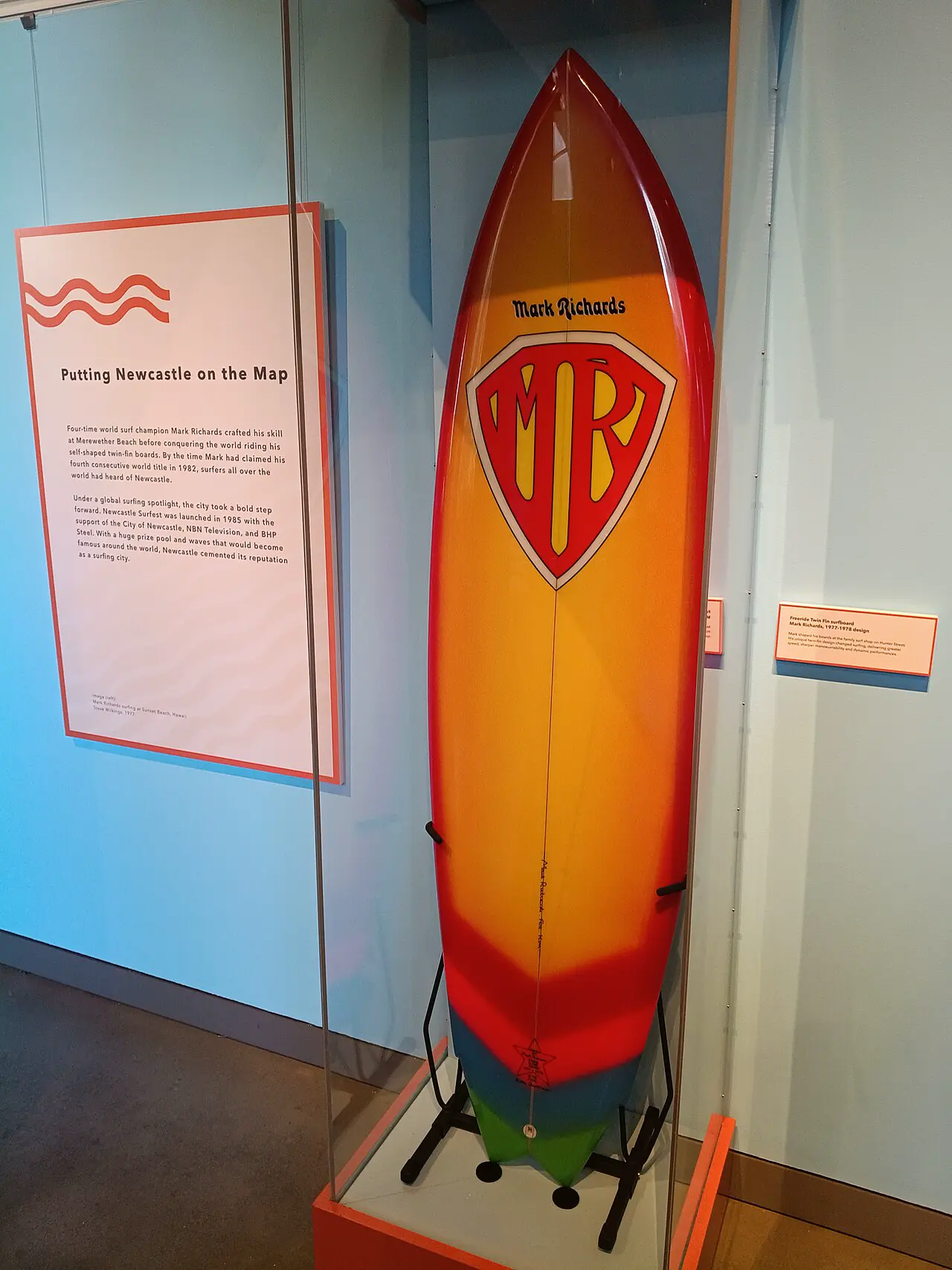
- Why a Mid-Length/Fish? Mid-lengths (6'6"-8'0") offer excellent glide and paddle power, superior to a groveler, but with more maneuverability than a traditional longboard. They are incredibly forgiving and versatile. A classic fish shape (shorter, wider, thicker, with a swallow tail) is also a fantastic option, renowned for its speed and ability to fly across flat sections. Both offer significant high volume surfboard for small surf without the length of a longboard.
- Recommended Dimensions (Mid-Length): 7'0"-8'0" x 21"-22.5" x 2.75"-3.25" (45-60+ liters).
- Recommended Dimensions (Fish): 5'4"-6'0" x 20"-22" x 2.5"-2.75" (32-45 liters).
- Pros: Great paddle power, very stable, generates speed easily, more transportable than a longboard. The fish offers unique speed and carve potential.
- Cons: Mid-lengths can be less maneuverable than dedicated grovelers; fish can feel loose if not ridden correctly.
4. Kids and Smaller Surfers
For kids and very light surfers, the principles remain the same: high volume and stability. However, the dimensions will scale down.
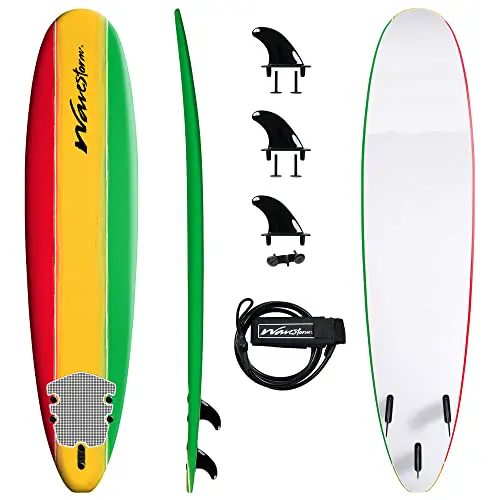
- Why Foamies or Small Longboards? For learning kids, a soft-top foam board (5'0"-7'0") is ideal due to safety and high flotation. As they progress, a scaled-down longboard (7'0"-8'0") or even a small, high-volume fish or groveler designed for their weight can be perfect. A great small wave surfboard for beginner kids would be a 6'0" foamie.
- Recommended Dimensions: Foamie: 5'0"-7'0" x 20"-22" x 3"+. Small longboard: 7'0"-8'0" x 21"-22" x 2.75"-3".
- Pros: Safe, easy to paddle, buoyant, fosters rapid learning.
- Cons: Limited performance potential for advanced maneuvers.
Pro Tip: For children, consider the weight and strength-to-board-size ratio carefully. A board that's too heavy or long will hinder their progression. Safety is paramount – always ensure proper supervision.
Comparing Board Types for Knee-High Waves: Quantitative & Qualitative Analysis
Let's break down how these board types stack up in knee-high conditions, focusing on key performance indicators.
| Feature | Longboard | Mid-Length | Groveler | Fish | | :------------------- | :------------- | :------------- | :-------------- | :------------- | | Paddling Speed | Excellent | Very Good | Good | Very Good | | Takeoff Threshold| Very Low | Low | Moderate | Low | | Maneuverability | Low | Moderate | High | High | | Speed Generation | Moderate (Trim)| Good (Glide) | Excellent (Pump)| Excellent (Flow)| | Wave Count (avg) | Very High | High | Medium-High | High | | Riding Difficulty| Easy | Easy-Moderate | Moderate | Moderate | | Best for | Beginners, Cruising, Long Glides, Any knee-high | Heavier surfers, Easy Turns, Point Breaks, Any knee-high | Shortboarders, Beach Breaks, Tight Turns, Choppy knee-high | Speed, Carves, Soft Waves, Clean knee-high |
This comparison highlights that while longboards offer the highest wave count and easiest entry, a specialized groveler for weak waves provides the best balance of speed generation and agility for an intermediate shortboarder. For additional insights into various board types, explore our Board Types Guide.
Optimizing Your Knee-High Quiver: Beyond the Board
Selecting the right board is only part of the equation. To truly maximize your knee-high sessions, consider these additional factors:
Local Conditions: Beachbreak vs. Point vs. Reef
- Choppy Beachbreak: In these common knee-high scenarios, a wider, higher-volume groveler or fish with fuller rails will offer stability and help you plane over the inconsistent surface. Boards with less rocker are crucial here.
- Clean Point/Reef: If you're lucky enough to have a perfectly peeling, albeit small, point or reef break, a mid-length or a speed-oriented fish can be incredible. The consistent wave shape allows for longer glides and more fluid turns.
Pro Tip: Check Surfline's detailed reports (www.surfline.com) for real-time local conditions. Knowing the wave period, swell direction, and wind will help you decide which board in your quiver is the best fit.
Fin Choice Matters
As mentioned, fins can drastically alter a board's feel. For knee-high waves, generally lean towards fins that provide drive and speed. Larger surface area fins, or those with less sweep (rake) and more base, will give you more forward drive. Consider experimenting with different fin setups – a twin fin, for example, can transform a groveler from good to incredible in mushy conditions. Our Fin Systems Guide offers a deep dive into fin dynamics.
Wax, Traction, and Leash
Don't overlook the basics! Ensure your board is waxed with cold water wax for maximum grip, even if the water isn't freezing. A good traction pad provides essential foot placement. Always use a leash appropriate for your board length and wave size; for tiny waves, a thinner, lighter leash will reduce drag.
Physical Fitness and Technique
Even with the best surfboard for knee high waves, consistent paddling and pop-up practice are key. Focus on a strong, efficient paddle stroke. In small waves, often a single, powerful stroke at the right moment can make the difference between catching and missing a wave. Work on your pump technique to generate speed once you're on the wave. These small, subtle movements are crucial for keeping momentum in weak surf.
Quiver Strategy for the All-Round Surfer
Many surfers face the reality that their local spot is knee-high most of the year, but occasionally delivers chest-to-head-high surf. How do you build a practical quiver?
- The Daily Driver (Groveler/Fish): This is your primary groveler for weak waves, optimized for 0-3 ft conditions. It should be high-volume, wide, and flat. This board will get the most use.
- The Step-Up (Performance Shortboard/Hybrid): For those 3-6 ft days, you'll want a slightly more refined performance shortboard or a hybrid design that handles more power and curve. This board will likely have less volume and more rocker than your groveler.
- The Longboard (Optional but Recommended): If you truly want to maximize every micro-swell, a longboard is an invaluable addition for those days when the waves are barely breaking, or simply for a different, more glide-oriented style of surfing.
An example for a 170lb intermediate surfer might be:
- Groveler: 5'7" x 20.5" x 2.5" (34L) quad fin fish
- Performance Shortboard: 5'10" x 19" x 2.38" (28L) thruster
- Longboard: 9'2" x 22.75" x 3" (75L)
Consider using our Board Finder Quiz for personalized recommendations based on your unique profile and local conditions. For a broader historical context on surfboard evolution, check out our Surfing History section.
Pro Tip: Don't be afraid to try different boards from friends or local shops. Experience is the best teacher when it comes to feeling what works for you in knee-high surf. Sometimes, a unique board from a lesser-known shaper can become your go-to tiny wave weapon. Check out expert reviews from Stab Magazine (www.stabmag.com) for fresh perspectives on board designs.
Conclusion: Catch More Waves, Have More Fun
Choosing the best surfboard for knee high waves is about making a conscious decision to optimize your equipment for the conditions at hand. It's about letting go of the ego that says you must ride a shortboard, and embracing the joy of a high wave count and effortless glide. Whether it's a trusty longboard, a zippy fish, or a performance-oriented groveler for weak waves, the right craft will transform your perception of small surf.
At Surfboard Life, our mission is to help you find that perfect connection between surfer, board, and wave. Don't let another knee-high day pass you by. Arm yourself with the right knowledge and the perfect board, and go make those small waves feel epic. Still unsure? Our the board finder is ready to help you dial in your perfect board.
Frequently Asked Questions (FAQs)
Q1: What's the best board for an absolute beginner in knee-high waves?
A: For absolute beginners, a foam board (soft-top) between 6'0"-8'0" or a traditional longboard (9'0"+) is highly recommended. These boards offer maximum stability, flotation, and ease of paddling, making them the ideal small wave surfboard for beginner surfers.
Q2: Can I ride a regular shortboard in knee-high waves?
A: While technically possible, riding a regular shortboard in knee-high waves will be very challenging and frustrating. Its low volume and high rocker are designed for powerful waves, making it difficult to paddle and generate speed in weak surf. You'll catch very few waves.
Q3: How much volume should my board have for knee-high waves?
A: For knee-high waves, you generally want significantly more volume than your typical board. Beginners should aim for 60+ liters (longboard), while intermediate shortboarders riding grovelers might add 5-10 liters to their usual volume, often landing in the 30-40 liter range, making it a high volume surfboard for small surf.
Q4: Are twin fins good for knee-high waves?
A: Yes, twin fins are excellent for knee-high waves! They provide exceptional speed, a loose feel, and allow for quick pivots and changes in direction, which is perfect for generating momentum and flair on small, soft waves. Many groveler for weak waves designs pair well with a twin fin setup.
Q5: What's the difference between a fish and a groveler?
A: While often overlapping, a traditional fish typically has a very wide, often flat, swallow tail, with a characteristic outline that emphasizes speed and glide. A groveler is a broader category of small-wave performance boards that can incorporate elements of fish, hybrids, or even tweaked shortboard designs, specifically engineered for maximum performance in minimal surf. Both are strong knee high surfboard recommendations.