Best Surfboard for Small Weak Waves: Ultimate 2024 Guide
Finding the best surfboard for small weak waves can transform your surf sessions. This ultimate 2024 guide provides data-driven recommendations, focusing on optimal volume, board types, and budget-friendly options to help you catch more waves and have more fun in subpar conditions. Discover your perfect small wave groveler today!
Surfboard Life · May 9, 2026 · 14 min read
Finding the best surfboard for small weak waves is crucial for maximizing your wave count and fun when conditions are less than ideal. The ideal board for these conditions typically features higher volume, a wider outline, and flatter rocker to generate speed and glide easily over flat sections. This guide delves into everything you need to know to choose your ultimate small wave groveler, from understanding volume to finding the perfect fin setup.
Surfing small, weak waves can often feel frustrating. The energy is low, the waves lack push, and standard performance shortboards tend to bog down. This is where specialized small wave groveler surfboards shine. These boards are engineered to excel in conditions where other boards fail, turning mushy waves into an absolute playground. At Surfboard Life, we believe every session should be a good one, and having the right equipment is fundamental. This comprehensive guide, informed by insights from experienced shapers and pro surfers like CJ Hobgood (who once famously said, "The best surfer is the one having the most fun"), will equip you with the knowledge to make an informed choice and ensure you're paddling into more waves and flying down the line, even on the weakest of days. We'll cut through the marketing hype and give you practical, data-driven advice specifically tailored to help you find the best surfboard for small weak waves that suits your style, skill level, and budget.
Decoding the Best Surfboard for Small Weak Waves: Key Characteristics
When searching for the best surfboard for small weak waves, certain design elements are consistently present. These features work synergistically to enhance speed, paddle power, and maneuverability in low-energy surf. Understanding these characteristics is the first step in selecting your ideal "groveler" or small wave groveler.
Volume: Your Accelerator in Weak Waves
Volume is arguably the most critical factor when choosing a board for small waves. Higher volume translates directly to increased buoyancy and paddle power. This means you'll catch waves earlier, glide over flat sections more easily, and maintain speed through mushy bits. For small waves, many surfers choose a board with 10-20% more volume than their standard shortboard. However, the exact amount depends on your weight, skill level, and fitness. A good starting point often involves using a Surfboard Volume Calculator to find your optimal range.
Outline: Width for Stability and Lift
Look for boards with a wider nose and tail. A wider nose provides extra surface area for paddling and lift, helping you get into waves with minimal effort. A wider tail, often a squash, swallow, or even a nuanced bat tail, offers more planing surface, which translates to speed and lift in weak waves. This extra width underfoot also provides a stable platform for turns, even when the wave face lacks steepness.
Rocker: The Flatter, the Faster
Flat rocker is non-negotiable for small waves. A board with minimal nose and tail rocker will sit higher on the water, reduce drag, and carry momentum much better than a board with aggressive curve. While a performance shortboard needs rocker to fit into critical pockets and make tight turns, a small wave groveler prioritizes speed generation and glide over radical maneuverability. A flatter bottom curve allows the board to plane across weak sections, keeping you moving forward.
Bottom Concaves: Generating Lift and Drive
Most small wave groveler designs incorporate generous bottom concaves, often single to double concave. A single concave through the middle of the board can create lift and channel water, providing speed. This often transitions into a double concave through the fins, which helps with maneuverability and control in weaker conditions. Some boards even feature a subtle vee in the tail to help transition from rail to rail, making turns easier in mush.
Rail Profile: Forgiveness and Flow
Fuller, softer rails are common on boards designed for small waves. These rails are more forgiving, less likely to catch in chop, and provide extra buoyancy. They allow the board to sit higher on the water, further contributing to speed and glide when the wave isn't providing much propulsion on its own.
Pro Tip: Don't be afraid to go thicker! That extra foam in the deck and rails greatly contributes to buoyancy and paddle speed, making a massive difference in your wave count on small days. Remember, the Surfboard Anatomy of a groveler is all about maximizing surface area and volume where it matters most.
Top Small Wave Groveler Board Types for 2024
Based on extensive testing, rider reviews, and expert insights, several board categories consistently deliver when you're seeking the best surfboard for small weak waves. Let's explore the standout performers and what makes them tick. For general board recommendations, don't forget to check out our Board Finder Quiz.
1. Hybrid Shapes (The All-Round Groveler)
Hybrid shapes often blend features of shortboards and funboards, offering a versatile solution for small to medium waves. They typically have a wider outline, slightly fuller nose, and flatter rocker than a standard shortboard, but maintain enough tail curve and fin options for performance. Brands like Firewire, Lost, and Channel Islands lead the pack.
- Recommended Boards:
- Firewire Seaside: A legendary modern twin fin, known for its incredible speed and playfulness. It thrives in small, mushy waves but holds its own when the waves get a bit better. The best fins for small waves on this board are specialized twin fins. (Check out Stab Mag's review: https://stabmag.com/hardware/board-test-review-firewire-seaside/)
- Lost Puddle Jumper HP: An evolution of the original Puddle Jumper, offering a slightly more performance-oriented feel while retaining its groveling prowess. Great for generating speed and carving in small surf.
- Channel Islands Ultra Joe: A fantastic option for those looking to downsize from a longboard or mid-length but still want incredible paddle power. It’s surprisingly agile for its volume.
2. Fish Surfboards (Classic Speed and Glide)
Fish surfboards, particularly modern takes on the classic twin-fin fish, are inherently designed for speed and glide in small waves. Their wide outline, swallow tail, and often low rocker make them a joy to ride in anything from ankle-high to head-high surf. They are superb as a small wave groveler.
- Recommended Boards:
- DHD Mini Twin II: A popular choice for its blend of speed, maneuverability, and classic twin-fin feel. It's incredibly fast down the line and easy to turn.
- Lost RNF '96: A highly versatile fish with a wider nose and tail, making it a wave-catching machine. It performs surprisingly well in a variety of conditions, not just small waves.
3. Progressive/Performance Grovelers (Small Wave with Punch)
These boards offer a more performance-driven feel in small waves, allowing for sharper turns and more aggressive surfing than traditional fish or hybrids. They often feature slightly more refined rails and concave combinations.
- Recommended Boards:
- Channel Islands Neck Beard 3: A compact, high-performance small wave groveler designed to be ridden short. It paddles surprisingly well and allows for snappy turns.
- Slater Designs S-Wing: A unique board with innovative design elements that generate speed and drive in weak surf, offering a different feel from a traditional shortboard.
Pro Tip: For a truly personalized recommendation beyond these top picks, consider using our the board finder. It can analyze your specific needs and current quiver to suggest the absolute best surfboard for small weak waves for you.
The Crucial Role of Surfboard Volume and Sizing
Understanding and correctly applying surfboard volume to your personal surfing profile is vital for finding the best surfboard for small weak waves. Volume is measured in liters and directly correlates to buoyancy. Too little volume, and you'll struggle to paddle and catch waves. Too much, and the board might feel unwieldy and hard to turn.
The general rule for small wave groveler boards is to increase your typical volume. For instance, if your standard performance shortboard is 28-30L, a good starting point for a groveler might be 32-36L. However, weight, skill, and age play significant roles. A beginner will generally need more volume than an advanced surfer of the same weight. Older surfers often benefit from increased volume as their paddle fitness might decrease.
Using the Surfboard Volume Calculator
Our Surfboard Volume Calculator is an indispensable tool here. Input your weight, height, age, and skill level, and it will provide a recommended volume range. For small wave boards, aim for the higher end of that recommended range, or even slightly above it, particularly if you find yourself struggling to catch waves.
| Rider Weight (lbs) | Skill Level: Beginner | Skill Level: Intermediate | Skill Level: Advanced | Small Wave Groveler (Approx. L) | | :----------------- | :-------------------- | :------------------------ | :-------------------- | :------------------------------- | | 140 | 30-34 L | 26-30 L | 22-26 L | 30-38 L | | 160 | 34-38 L | 30-34 L | 26-30 L | 34-42 L | | 180 | 38-42 L | 34-38 L | 30-34 L | 38-46 L | | 200 | 42-46 L | 38-42 L | 34-38 L | 42-50 L |
Note: These are general guidelines. Always cross-reference with our Surfboard Volume Calculator for personalized results.
Length, Width, and Thickness
While volume is paramount, length, width, and thickness contribute to how that volume is distributed. For small waves, you'll often ride a shorter board than your standard shortboard, but it will be significantly wider and thicker. This compact, high-volume outline creates a stable and fast platform. A wider nose helps with paddle power, and a fuller rail profile adds forgiveness and flotation. Understanding these elements is key to selecting the best surfboard for small weak waves.
Pro Tip: Don't just look at the length. A 5'4" x 20.5" x 2.5" groveler with 32L can paddle better and be faster than a 5'10" x 18.5" x 2.25" performance shortboard with 28L due to the volume distribution and outline. It's all about foam where you need it!
Budget-Friendly Options: Finding Your Inexpensive Groveler
Getting into a dedicated small wave groveler doesn't have to break the bank. While premium boards from top shapers offer cutting-edge designs, there are excellent budget small wave surfboard options available that provide fantastic performance without the hefty price tag. For a broader range of board types, consult our Board Types Guide.
Used Market Surfing
The used surfboard market is a treasure trove for fantastic deals. Websites like Craigslist, Facebook Marketplace, and local surf shop consignment racks often feature quality grovelers at a fraction of their new price. Look for boards with minimal dings and no major structural damage. Even a professional repair (often found via our Repair Center finder) can save you money compared to new.
Entry-Level Brands and Construction
Several brands specialize in offering good quality boards at more accessible price points. Look for pop-out constructions (e.g., EPS/epoxy with vacuum-bagging) which can be more durable and less expensive than custom PU/PE boards. While they might lack the precise feel of a hand-shaped board, many modern pop-outs are incredibly capable and perform well in small waves.
- Examples of Budget-Friendly Options:
- Catch Surf Beater/Odysea: While often considered foamies, these can be surprisingly fun and effective in tiny, weak waves, especially for beginners or those prioritizing fun over performance. They fall squarely into the budget small wave surfboard category.
- Global Surf Industries (GSI) Boards: Brands like Walden, HaydenShapes (select models), and JS (select models) on the GSI platform offer good quality construction at competitive prices, often through licensed factories that produce consistent shapes.
- Local Shapers' Off-the-Rack Models: Many local shapers offer production models that are more affordable than full customs, yet still have the advantage of local knowledge in their designs.
Pro Tip: Look for dinged-up display models or last-season's stock at your local surf shop. Often, you can negotiate a significant discount on a perfectly good small wave groveler.
Optimizing Your Ride: Best Fins for Small Waves
Fins are the engine of your surfboard, and selecting the right setup can dramatically impact how your best surfboard for small weak waves performs. The goal in small wave surfing is to generate speed, maintain drive, and facilitate easy turns. For an in-depth understanding, see our Fin Systems Guide.
Fin Configuration (Thruster, Twin, Quad)
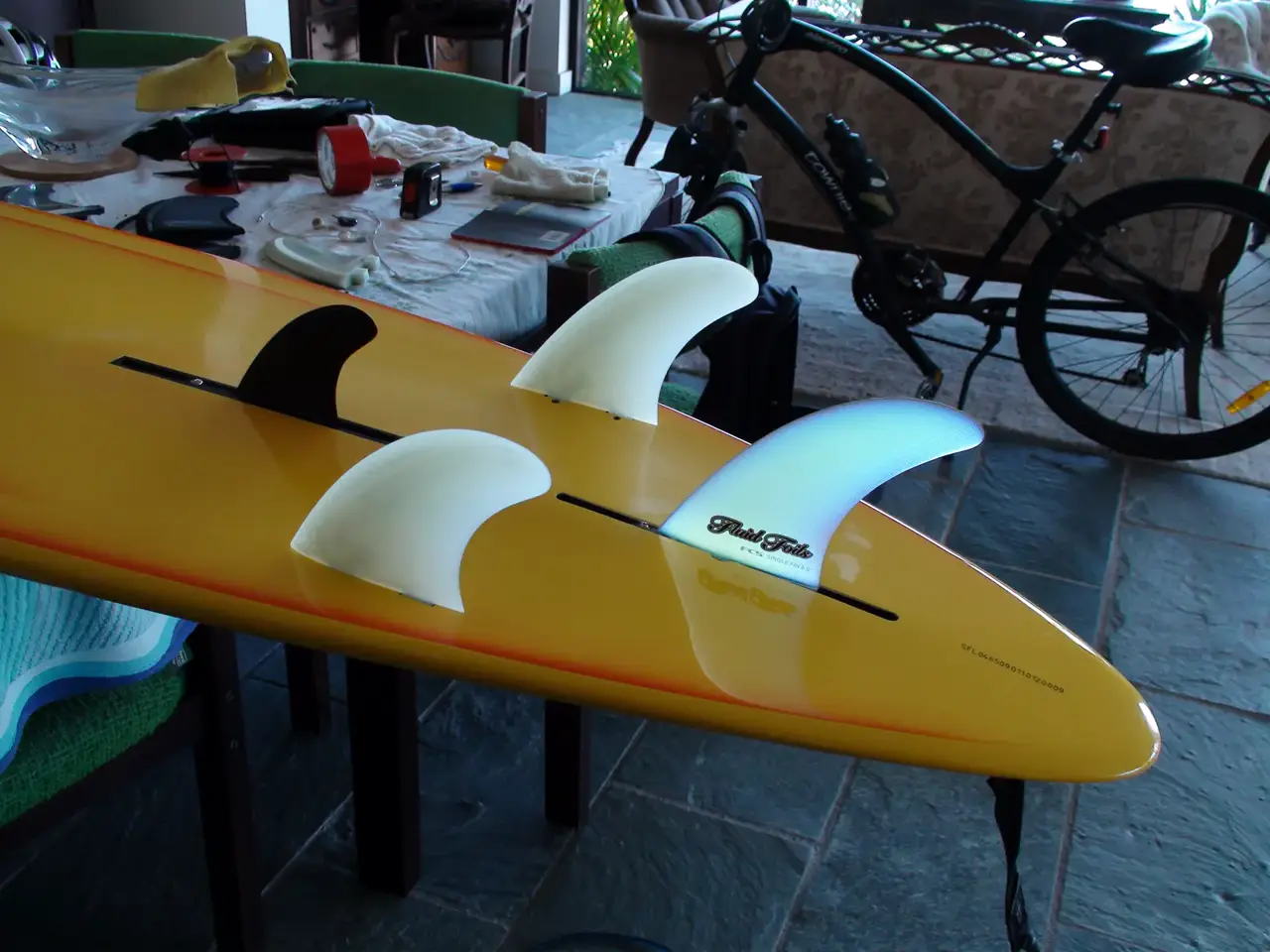
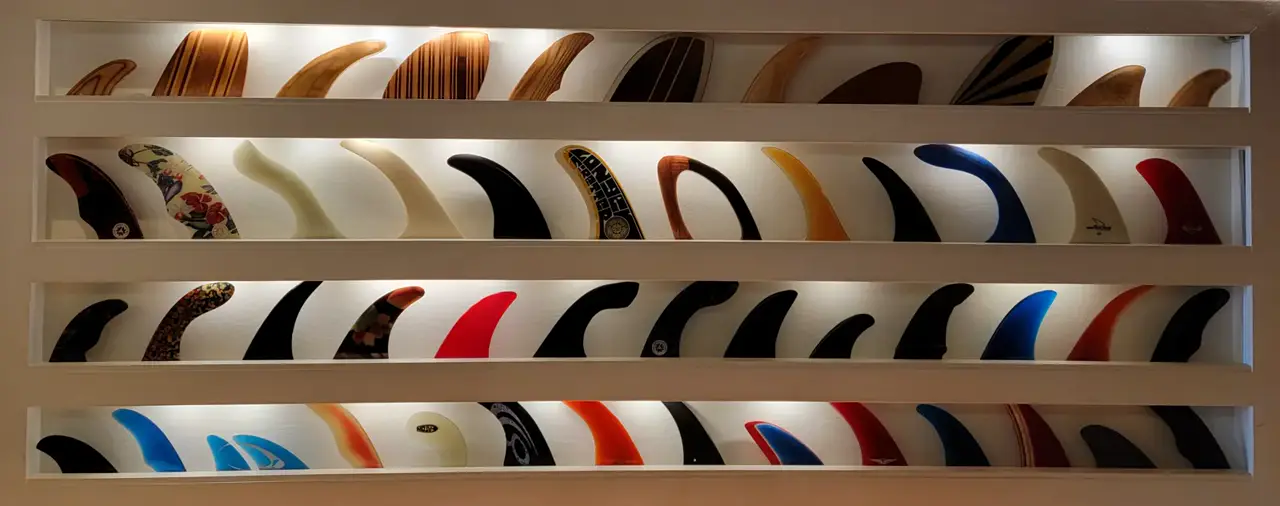
- Twin Fin: Often considered the king of small waves. Two large, upright fins create a loose, fast, and highly maneuverable ride. They excel at generating speed and provide a unique, flowing feel. Many small wave groveler designs, especially fish, are optimized for twin fins.
- Quad Fin: Four fins provide more drive and hold than a twin fin, while still offering excellent speed down the line. The two smaller trailer fins reduce drag compared to a center fin while still creating significant propulsion. Quads are a fantastic option for slightly punchier small waves or when you want more control than a twin provides.
- Thruster (3-fin): While typically associated with performance surfing, a thruster setup can work for small waves if the fins are chosen correctly. Look for fins with a larger area and less rake (more upright) to provide drive and quick pivots. Thrusters offer the most control and predictability.
- 2+1 Setup: Commonly found on mid-lengths and larger grovelers, this setup combines a large center fin with two small side bites. It offers great stability and drive for cruising, but can still be surprisingly nimble.
Fin Characteristics for Small Wave Performance
- Area: Generally, larger fin area provides more drive and hold, which is beneficial in weak waves where you need to generate your own speed. The best fins for small waves will often be on the larger side.
- Sweep/Rake: Less sweep (more upright fin) allows for tighter turns, while more sweep provides longer, carving turns. For small waves, a more upright fin can help with pivot and quick redirects.
- Foil: Thinner foils generate less drag, aiding in speed. Some fins designed for small waves have specific foils to maximize lift and minimize resistance.
- Flex: Stiffer fins offer more drive and control, while flexible fins provide a livelier, more forgiving feel. Many small wave fins balance the two, often having a stiffer base with a more flexible tip.
Pro Tip: Experiment with different fin sets! A dedicated small wave groveler can feel like a completely different board with a switch from twin to quad fins, or even different sized thrusters. This is one of the easiest and most cost-effective ways to fine-tune your board's performance.
Maintenance and Longevity for Your Small Wave Slayer
Even the best surfboard for small weak waves—or any surfboard for that matter—will only last if you take care of it. Proper maintenance extends the life of your board, maintains its performance characteristics, and protects your investment. While not directly performance-related, good care ensures your groveler is always ready for action.
- Rinse After Every Session: A quick rinse with fresh water removes salt, sand, and other debris that can degrade the board over time.
- Avoid Sun Exposure: UV rays are the enemy of surfboards, especially epoxy construction. Excessive sun exposure can cause yellowing, delamination, and weaken the board's structural integrity. Store your board in a cool, shaded place or a board bag.
- Ding Repair is Crucial: Even small dings can allow water to seep into the board's core, leading to delamination and permanent damage. Learn basic ding repair or take your board to a professional using our Repair Center guide. Timely repairs save money and prolong board life.
- Proper Storage: Store your board horizontally or on a rack, ideally in a board bag. Avoid leaning it vertically on its tail, as this can compress the foam and damage the tail.
- Check Fin Boxes: Regularly inspect fin boxes for cracks or stress fractures, especially after tough sessions or impacts. Loose fin boxes can lead to serious water intrusion.
By following these simple steps, your small wave groveler will remain in prime condition for countless sessions, ensuring you're always ready to make the most of those fickle, weak waves that often grace our coasts. For more general advice on getting the most out of your surfing, explore our Learn to Surf section or even dive into Surfing History to appreciate the evolution of board design.
Conclusion: Catch More Waves, Have More Fun
Choosing the best surfboard for small weak waves is about unlocking the potential in conditions that typically lead to frustration. By prioritizing volume, a wider and flatter outline, specific bottom contours, and the right fin setup, you transform marginal days into memorable sessions. Whether you opt for a classic fish, a modern hybrid, or a progressive groveler, the goal remains the same: more waves, more speed, and ultimately, more fun.
Don't let the waves dictate your stoke. Empower yourself with a dedicated small wave groveler, and you'll find yourself reaching for your board even when the forecast is looking less than epic. Remember to use our Surfboard Volume Calculator to dial in your dimensions and our Board Finder Quiz for personalized recommendations. Get out there, embrace the small stuff, and enjoy the ride!
Frequently Asked Questions (FAQ)
Q1: What makes a surfboard good for small weak waves?
A1: A good surfboard for small weak waves generally features high volume, a wide outline (especially the nose and tail), and a flat rocker. These characteristics maximize paddle power, speed generation, and glide over flat sections, helping surfers catch more waves and maintain momentum in low-energy conditions.
Q2: How much volume should I add for a small wave groveler?
A2: As a general guideline, aim for 10-20% more volume than your standard performance shortboard. However, this varies based on your weight, skill level, and fitness. Use a surfboard volume calculator to get a personalized recommendation and lean towards the higher end for small wave performance.
Q3: Are twin fins or quads better for small waves?
A3: Both twin fins and quads are excellent choices for small waves. Twin fins offer maximum speed and a loose, flowing feel, while quads provide more drive and control, especially when the wave has a bit more push. The best fins for small waves often depend on personal preference and the specific board design.
Q4: Can beginners use a small wave groveler?
A4: Yes, beginners can definitely benefit from a small wave groveler, especially higher-volume, wider models. The increased stability and paddle power make catching waves easier, which is crucial for learning. However, dedicated beginner boards (like soft-tops or longboards) might still be more forgiving initially.
Q5: Where can I find a good budget small wave surfboard?
A5: Excellent budget small wave surfboard options can be found on the used market (online marketplaces, local surf shops), from entry-level brands known for durable pop-out constructions, or by looking for discounted last-season's models. Prioritize solid condition over brand prestige to get the most value for money.