Soft Top vs Hard Top Surfboard Beginner: Your Ultimate Guide
Choosing between a soft top vs hard top surfboard for beginners is crucial for accelerating your learning curve. This guide offers personalized advice on sizing, progression, and the ideal board for your first waves, helping you make an informed decision.
Surfboard Life · October 17, 2026 · 12 min read
So, you're ready to catch your first wave, but staring at the vast array of surfboards leaves you wondering: soft top vs hard top surfboard beginner? For beginners, a soft top surfboard (often called a foamie) is generally recommended due to its superior stability, buoyancy, ease of paddling, and reduced risk of injury during falls, making the initial learning phase much more forgiving and enjoyable. This article will help you decide which board is right for your unique journey, ensuring a safe and rapid beginner surfboard progression.
Embarking on your surfing adventure is incredibly exciting, but the choice of your first surfboard can significantly impact your learning experience. The fundamental decision for most novices boils down to a soft top vs hard top surfboard beginner dilemma. While soft tops offer a forgiving introduction, hard tops promise performance and maneuverability. We’ll dive deep into their differences, helping you understand which material and design best suits your weight, skill level, and aspirations. We'll also address crucial questions like soft top surfboard size by weight, when to switch from soft top to hard surfboard, and explore the role of a hybrid soft top surfboard beginner in your journey. Our goal is to provide a personalized, comprehensive guide to get you paddling into success from day one.
The Fundamental Difference: Soft Top vs Hard Top Surfboard Beginner
At its core, the distinction between a soft top and a hard top surfboard lies in their construction and intended use. Understanding these differences is paramount for any beginner looking to make an informed choice.
Soft Top Surfboards: The Beginner's Best Friend
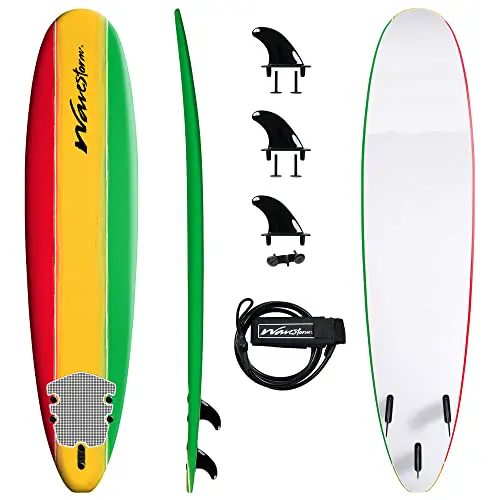
Soft top surfboards, affectionately known as foamies, are characterized by their soft, impact-absorbing deck and rails, often with a slick, durable bottom. They typically feature an EPS foam core, sometimes with wooden or carbon stringers for added stiffness and durability. This construction makes them incredibly forgiving.
- Safety First: The soft deck drastically reduces the impact of collisions, both with yourself and other surfers. This is especially important in crowded beginner lineups and for building confidence as you inevitably fall off countless times. As an experienced shaper once noted, "A foamie is like training wheels for your surfing journey – it lets you learn without the fear of hurting yourself or dinging your board." For more on board components, see our Surfboard Anatomy guide.
- Unmatched Stability and Buoyancy: Soft tops are generally thicker and wider than hard boards of similar length, packing significantly more volume. This high volume translates to exceptional stability, making it easier to paddle, pop up, and maintain balance once on a wave. This buoyancy also makes catching waves significantly easier, a critical factor for boosting confidence in early sessions.
- Durability: Foamies are built to take a beating. They are highly resistant to dings and pressure dents, making them ideal for beginners who are still learning board control and proper handling. You won't constantly be running to the repair shop, which is a major plus.
- Cost-Effective (Initially): While quality soft tops can still be an investment, their lower repair needs often make them more cost-effective over the short term for beginners.
Pro Tip: Don't underestimate the fun factor of a soft top. Even experienced surfers often keep a foamie in their quiver for small, playful days or for sharing the stoke with friends learning to surf!
Hard Top Surfboards: Performance and Progression
Hard top surfboards, typically made from fiberglass, epoxy, or other composite materials, offer a much different experience. These boards are designed for performance, speed, and maneuverability once a surfer has mastered the basics. They are the standard for intermediate and advanced surfing.
- Responsiveness and Control: The rigid construction allows for precise rail-to-rail transitions, making turns sharper and more dynamic. This is where you unlock the true feeling of carving a wave.
- Speed: Hard boards, with their thinner rails and performance-oriented shapes, generate more speed down the line, allowing surfers to navigate steeper sections and perform maneuvers.
- Variety of Shapes: Once you move to hard tops, the world of surfboard shapes opens up, from shortboards to longboards, funboards, and specialized designs for specific wave types. This allows for fine-tuning your equipment to your surfing style and conditions. Explore these variations in our Board Types Guide.
- Fragility: The trade-off for performance is fragility. Hard boards are susceptible to dings, cracks, and delamination from impacts. Proper care and occasional Surfboard Repair are essential.
Choosing Your First Board: Soft Top Surfboard Size by Weight and More
One of the most common beginner questions is, "What soft top surfboard size by weight should I get?" Sizing is crucial for success, ensuring adequate buoyancy for your body type and local wave conditions. We recommend using a high-volume soft top for your first board.
General Sizing Guidelines for Soft Tops:
For a true beginner, we generally advise a soft top that is significantly longer and wider than your height. The goal is maximum stability and paddle power.
- Adults (Under 150 lbs / 68 kg): 7'0" to 8'0" soft top
- Adults (150-200 lbs / 68-90 kg): 8'0" to 9'0" soft top
- Adults (Over 200 lbs / 90 kg): 9'0"+ soft top
Pro Tip: When in doubt, go slightly larger. A board that's too small will be frustrating; one that's a bit too big will still help you catch waves and develop fundamentals. Consult our Volume Calculator for a more precise estimation based on your specific details.
Factors Beyond Weight:
While soft top surfboard size by weight is a primary factor, consider these:
- Height: A board that's at least 1-2 feet taller than you will offer more glide and stability.
- Fitness Level: Less fit individuals will benefit from more volume for easier paddling.
- Wave Type: If you're learning in very small, mushy waves, more volume (a larger board) will help immensely.
- Confidence: A larger, more stable board builds confidence faster.
When to Switch From Soft Top to Hard Surfboard: Your Progression Path
The question of when to switch from soft top to hard surfboard is a milestone in every surfer's journey. It's not about a fixed timeline, but rather a set of skill-based indicators. Rushing this transition can lead to frustration and hinder your beginner surfboard progression.
Key Indicators You're Ready for a Hard Board:
- Consistent Pop-Up: You can reliably pop up to your feet and ride straight to the beach on most waves you catch.
- Paddle Fitness: You can paddle out through small white water or unbroken waves with relative ease, and don't feel exhausted after a few waves.
- Wave Selection: You're starting to understand where to position yourself in the lineup to catch unbroken waves, not just whitewater.
- Basic Control: You can maintain balance and make slight adjustments to your direction while riding, even if it's just a slight turn.
- Understanding of Etiquette: You are aware of and practice basic surf etiquette (e.g., right-of-way, not dropping in), which becomes more critical on less forgiving boards. Learn more about surf etiquette in our Learn to Surf guide.
According to Surfline, "Many beginners make the mistake of transitioning too early, which often results in slower progression and more frustration." Surfline.com
Your Next Step: The Hybrid Soft Top Surfboard Beginner or a Hard Funboard?
Once you’ve mastered the fundamentals on your foamie, you don't have to jump straight to a high-performance shortboard. Many surfers find a transitional board to be the perfect beginner surfboard progression step. This is where the hybrid soft top surfboard beginner or a hard funboard shines.
- Hybrid Soft Top Surfboards: These boards blend the best of both worlds. They often have a soft deck for comfort and reduced impact, but with a more performance-oriented hard bottom, stiffer core, and sometimes even interchangeable fin systems (like FCS or Futures – see our Fin Systems Guide). This allows for better turning and speed while retaining some forgiveness. They are an excellent option for those not quite ready for the full hard board experience.
- Hard Funboards/Mini-mals: These are hard (fiberglass or epoxy) boards typically ranging from 6'8" to 8'0" in length. They offer a great balance of paddle power and maneuverability. They are narrower and thinner than soft tops, providing more rail-to-rail sensitivity, but still have enough volume to be forgiving. For many, a funboard is the classic
when to switch from soft top to hard surfboardchoice.
Performance Trade-offs: Waves, Crowds, and Conditions
The choice between a soft top vs hard top surfboard beginner also depends heavily on the conditions you'll be surfing in. Each board type excels in different environments.
Soft Tops in Action:
- Small, Weak Waves: Soft tops are kings of small, gutless waves. Their high volume makes catching these tricky waves much easier, ensuring you maximize your wave count even on marginal days.
- Crowded Lineups: Due to their forgiving nature, soft tops are safer in crowded beginner zones. They minimize the risk of injury to yourself and others during accidental collisions.
- Beach Breaks: Most beginner surf spots are sandy beach breaks, where the waves are often less powerful and less consistent. Soft tops are perfectly suited for these conditions.
Hard Tops in Action:
- Powerful Waves: As waves gain power, hard boards with their performance shapes and stiffer construction come alive. They can handle steep drops and allow for greater control in critical sections.
- Maneuverability: If you're looking to turn, carve, and eventually perform advanced maneuvers, a hard board is essential. Soft tops, while fun, are inherently less agile.
- Reef/Point Breaks: While a beginner wouldn't start here, advanced surfers utilize hard boards for the precision needed in more technical reef or point breaks.
Total Ownership Cost and Durability: A Long-Term View
When considering soft top vs hard top surfboard beginner, many only look at the initial purchase price. However, a holistic view of ownership cost, including durability, repairs, and resale value, reveals a more nuanced picture.
Soft Top Ownership:
- Initial Cost: Generally, soft tops can range from $200-$600, making them accessible.
- Durability: Highly durable and resistant to dings. They can withstand significant abuse without major damage.
- Repairs: Minimal. Most minor dings can be left alone, or easily fixed with waterproof tape.
- Resale Value: Often holds its value well if kept in decent condition, especially for popular beginner brands. They're always in demand for new learners.
- Lifespan: Can last many years if not left in direct sunlight or neglected. The soft deck can peel over time, but the board generally remains functional.
Hard Top Ownership:
- Initial Cost: Can range from $400-$1200+ for a new board, depending on construction (epoxy is often cheaper than fiberglass).
- Durability: Prone to dings and cracks from impacts. Requires more careful handling.
- Repairs: Dings require immediate repair to prevent waterlogging. Professional repairs can cost $50-$200+ per ding. DIY repairs are possible but require skill. Visit our Repair Center for tips.
- Resale Value: Varies widely based on brand, condition, and market demand. Dings significantly reduce value.
- Lifespan: With proper care, a hard board can last decades. However, constant dings and repairs can shorten its pristine life.
In the long run, the cumulative repair costs for a hard board can sometimes offset the initial savings of a cheaper hard board compared to a durable soft top. For a beginner, the peace of mind of a ding-resistant soft top is often invaluable.
Safety and Etiquette Considerations
Safety is paramount, especially when you're first learning. Both board types have safety implications.
Soft Top Safety:
- Reduced Impact: The primary safety benefit is the soft deck, which significantly cushions impacts during falls or collisions. This is safer for the surfer and for anyone they might accidentally hit. World Surf League (WSL) often emphasizes safety for youth programs, frequently using soft tops. WorldSurfLeague.com
- Flexible Fins: Many soft tops come with soft, flexible fins, further reducing the risk of cuts or punctures.
- Crowd-Friendly: For crowded beginner spots, a soft top is generally considered a more courteous and safer option.
Hard Top Safety:
- Increased Impact: Hard boards, with their sharp noses, tails, and fins, pose a higher risk of injury during impacts. This is why a strong understanding of board control and surf etiquette is crucial before transitioning.
- Fixed Fins: Hard boards typically have rigid fins (FCS, Futures, glass-ons – see Fin Systems Guide), which can cause severe cuts.
- Leash Use: A well-fitted leash is essential for both board types to prevent runaway boards, but particularly with hard boards due to their potential to cause injury or damage. For more on essential gear, check out Surfer Magazine.
Conclusion: Your Personalized Path to Surfing Success
Ultimately, the choice between soft top vs hard top surfboard beginner is a personal one, but for 99% of new surfers, a high-volume soft top is the unequivocally correct starting point. It provides the safest, most effective, and most fun way to learn the fundamentals of surfing, accelerating your beginner surfboard progression.
Start with a suitable soft top surfboard size by weight, master your pop-up, wave selection, and paddling, and only then consider when to switch from soft top to hard surfboard. Don't shy away from a hybrid soft top surfboard beginner or a hard funboard as your next step. The goal isn't to get to a shortboard as fast as possible; it's to enjoy the journey and become a proficient, confident, and safe surfer. Remember, surfing is a marathon, not a sprint. Take your time, enjoy every wave, and embrace the learning curve.
Still unsure? Our Board Finder Quiz can provide personalized recommendations, or chat with our the board finder for tailored advice!
Frequently Asked Questions (FAQ)
Q1: What soft-top length and volume should a beginner choose based on body weight, height, and local wave conditions?
A beginner should generally choose a soft top that is significantly longer (1-2 feet taller than them) and wider, with high volume. For instance, an average adult under 150 lbs might opt for a 7'0"-8'0" soft top, while someone over 200 lbs might need a 9'0"+. More volume helps with stability, paddling, and catching waves, especially in small, mushy beginner waves. Always prioritize volume over length for ease of learning.
Q2: What specific skills indicate that a beginner is ready to move from a soft top to a hard board?
A beginner is ready to transition when they can consistently paddle out, catch unbroken waves, perform a reliable pop-up to their feet, and ride straight or make slight directional adjustments. They should also possess basic surf etiquette knowledge and feel comfortable controlling their board in varying conditions. Rushing this step often hinders progression.
Q3: Is a hybrid soft top or epoxy funboard a better progression step than moving directly to a traditional fiberglass board?
Yes, a hybrid soft top or an epoxy funboard (mini-mal) is often a much better and more forgiving progression step. They offer increased performance and maneuverability compared to a full soft top, but retain some of the stability and paddle power needed for continued skill development, bridging the gap before moving to more advanced, less stable hard boards like fiberglass shortboards.
Q4: How do soft and hard boards compare in small, weak waves versus powerful or crowded surf?
Soft tops excel in small, weak waves due to their high volume, making wave catching easier and maximizing wave count. They are also much safer in crowded beginner lineups due to their soft construction. Hard boards, while less forgiving in weak waves, come alive in powerful surf, offering superior speed, control, and maneuverability for carving and more advanced turns. Hard boards are generally not recommended for crowded beginner areas due to increased injury risk.
Q5: Are soft tops actually cheaper over several years after accounting for durability, repairs, resale value, and replacement costs?
Potentially, yes. While the initial purchase price of a high-quality soft top might be comparable to a budget hard board, soft tops require significantly fewer repairs and are far more durable, especially for beginners prone to dings. This greatly reduces long-term maintenance costs. Additionally, soft tops tend to hold their resale value well due to consistent demand from new learners, making them a very cost-effective choice over several years of beginner progression.