Fall Surfboard Recommendations: Cold Water Progression
Upgrade your autumn quiver with our expert fall surfboard recommendations. Learn how cold water, wetsuit weight, and changing swells impact volume, rocker, and board choice for beginners and intermediates.
Surfboard Life · November 13, 2026 · 11 min read
The best fall surfboard recommendations center on adding 2 to 5 liters of volume to your standard quiver, opting for slightly wider outlines with relaxed entry rockers, and choosing versatile hybrid shapes that paddle efficiently through brisk autumn winds while supporting the added physical burden of cold-water rubber.
As summer fades, ocean conditions transform dramatically. Transitioning from warm, forgiving beach breaks into crisp autumn swells brings heavier wave power, dropping water temperatures, and the unavoidable reality of neoprene. Pulling on a 3/2mm, 4/3mm, or hooded 5/4mm wetsuit adds 5 to 9 pounds of physical drag and weight to your frame, while also restricting paddle mobility around the shoulders. At the same time, denser cold water exerts distinct hydrodynamic drag on your surfboard's planing surface.
Whether you are hunting clean groundswells generated by offshore low-pressure systems or navigating the unpredictable chop of Great Lakes autumn surf, matching your equipment to seasonal shifts is essential. This cold water surfboard guide breaks down the exact shapes, volumes, and construction styles you need to maximize your wave count and maintain progression through the brisk autumn months.
The Cold Water Factor: Why Autumn Demands New Equipment
When water temperatures plunge from the 70s into the 50s and below, your body and board operate under completely different physics. According to seasonal data from Surfline, autumn is historically the most consistent window for coastal swells, yet many surfers find themselves sluggish and out of position. The reasons boil down to three primary seasonal factors:
- Wetsuit Burden & Paddle Fatigue: A wet 4/3mm suit with booties adds approximately 6 to 8 pounds of dead weight when saturated. Even top-tier limestone neoprene creates subtle joint resistance, sapping upper-body endurance. If your board barely floats you in July, it will sink under your chest by October.
- Water Density Dynamics: Cold saltwater is measurably denser than warm saltwater. While denser water theoretically provides marginal extra lift, it creates noticeably higher skin friction and viscous drag against your hull, dulling your board's acceleration off the bottom.
- Changing Swell Periods: Autumn marks the collision of fading short-period wind swells and booming, long-period groundswells. You need a board that can plane across flat, soft sections without catching its nose on sudden steep drop-ins.
To see exactly how wetsuit weight alters your personal buoyancy targets, use our Volume Calculator to recalculate your baseline cubic liters for cold water.
Pro Tip: As a baseline rule of thumb, add 2 to 3 liters of volume for a 3/2mm or 4/3mm wetsuit, and 4 to 6 liters if you surf in extreme cold requiring a 5/4mm suit, boots, and gloves.
Top Fall Surfboard Recommendations for Changing Autumn Swells
Balancing cold-water paddle power with high-line speed requires nuanced design. The best fall surfboard recommendations avoid extreme extremes—super-refined potato chips will stall in thick rubber, while massive, unyielding logs can get unruly when fall groundswells deliver steep overhead sets. Here are our top picks across categories.
| Board Model | Best For | Volume Range | Construction | Price Tier | | :--- | :--- | :--- | :--- | :--- | | Catch Surf Heritage 7'0 | Early-Fall Beginners | 55L - 72L | High-Density Soft-Top | Budget ($) | | MF Beastie EPS Soft-Top | Adv. Beginners / Intermediates | 37L - 56L | Hybrid EPS / Soft Deck | Mid-Range ($) | | Torq Mod Fun 6'8 - 7'2 | Transitioning Progression | 42L - 52L | TET Epoxy Matrix | Mid-Range ($) | | Lost Round Nose Fish 96 | Punchy Autumn Shorebreaks | 29L - 42L | PU / Poly or C4 | Premium ($$) | | Album Twinsman (Oversized) | Intermediate Fall Carving | 32L - 44L | Custom PU / Dark Arts | Premium ($$) | | Critical Slide Fun Guy | Lake / Mushy Swell Cruising | 44L - 58L | Traditional PU | Mid-to-High ($$) |
Best Autumn Beginner Surfboards: Stability Meets Chilly Waters
For novice surfers continuing their journey past the balmy summer months, finding proper autumn beginner surfboards is paramount to avoiding mid-session burnout. The priority here is early wave entry so you can execute your pop-up before the wave sections throw.
1. Mick Fanning (MF) Beastie Hybrid (6'6" to 7'6")
The MF Beastie bridges the gap between a pure foamie and a composite hardboard. Designed by 3x World Surf League World Champion Mick Fanning, this shape features an EPS core wrapped in durable fiberglass, topped with soft EVA foam.
- Why it shines in fall: It carries genuine fiberglass performance rails that cut through choppy autumn surface chatter, while the forgiving deck ensures safety when cold limbs cause occasional slip-ups.
- Ideal Conditions: Waist-to-head-high rolling beach breaks and soft reef points.
2. Catch Surf Odysea Heritage Series (7'0" or 8'0")
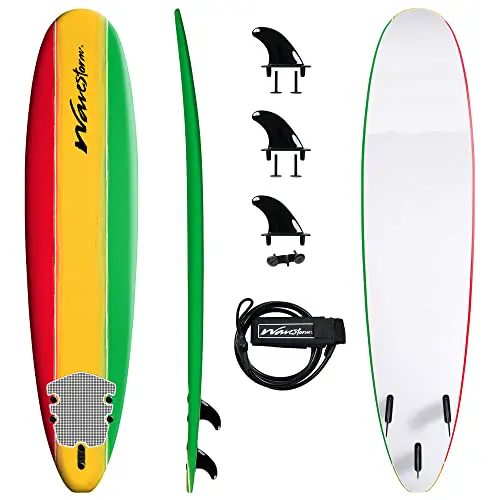
If you are on a budget or braving cold Great Lakes surf, this soft-top platform offers immense stability. Traditional foamies can feel like sponges in cold water, but the triple-stringer core in the Heritage keeps the rocker stiff under heavier paddle loads. Learn more about navigating early water fundamentals in our Learn to Surf section.
3. Torq Mod Fun TET (6'8" to 7'2")
Torq's Epoxy Technology creates an impact-resistant shield that laughs off rocky fall entries and cobblestone shorelines. With a wide nose outline and moderate entry rocker, it catches weak autumn slop early, yet holds its line when clean, overhead groundswells arrive.
Pro Tip: When surfing autumn beginner surfboards in sub-60°F water, clean off all your warm-water wax immediately. Layering cold-water wax directly over a hard tropical base creates slick spots, causing footing failure on critical drops.
Top Intermediate Fall Surfboards: Stepping Up in Punchy Surf
Intermediate surfers face a unique seasonal dilemma. You want to execute tight rail turns and generate speed down the line, but thick neoprene restricts your quickness. The solution is turning to intermediate fall surfboards that feature forward-placed foam, flatter center deck profiles, and sensitive tail designs.
1. The Modern Classic: Lost Round Nose Fish '96
Matt Biolos's legendary RNF platform is a staple in any high-performing quiver. When sized 1 to 2 inches shorter and slightly wider than your standard shortboard, the RNF '96 acts as a lethal cold-water weapon. Its wide chest area counteracts wetsuit fatigue, while the pulled-in swallow tail bites cleanly into steep, hollow faces. Explore more about design lines in our Board Types Guide.
2. The High-Volume Twin: Album Twinsman
Twin fins provide low-drag planing speed through flat sections, which is crucial when paddling against gusty offshore winds. As reported by surf hardware reviewers at Stab Magazine, modern performance twins like the Twinsman retain control in critical waves while delivering extra glide. Sizing this board with an extra 1.5 to 2.5 liters of foam gives intermediates the perfect balance of glide and responsiveness.
3. The Cold-Water Hybrid: Pyzel Gremlin or Ghost XL
For punchy beach breaks where waves pitch fast on shallow sandbars, the Gremlin packs maximum volume into a compact outline without feeling boaty. Its single-to-double concave bottom directs water through the center, generating instantaneous lift as soon as you scratch into chilly sets.
Sizing Guide: Fall Wave Surfboard Picks & Tail Design
Choosing the right board shape requires understanding how foam is distributed through your board's geometry. Explore our guide to Surfboard Anatomy to see how nose outlines, rails, and tails dictate performance in cold, powerful conditions.
SWELL CONDITION         RECOMMENDED TAIL         TARGET VOLUME ADJUSTMENT
-------------------------------------------------------------------------
Soft Autumn Rollers     Wide Squash / Fish Tail  +3 to +5 Liters Over Summer
Choppy Windswell        Rounded Square           +2 to +4 Liters Over Summer
Clean Fall Groundswell  Round / Pin Tail         +1 to +3 Liters Over Summer
Reef / Slab Autumn Hunt Pin Tail / Step-Up       +2 to +4 Liters (Longer Rail)
When curating your fall wave surfboard picks, pay close attention to your rail thickness. If your rails are overly blocky, they will skip off the face of steeper autumn waves. Instead, search for a board that packs volume along the stringer (chest and deck center) while tapering down to sensitive, thinned-out rails through the rear third of the board. This configuration delivers effortless paddling under wetsuit weight alongside decisive bite in steep surf.
If you are uncertain how to dial in your dimensions, test out our interactive Board Finder Quiz or ask our dedicated the board finder for personalized, real-time sizing analysis.
Fin Configurations and Cold Water Drive
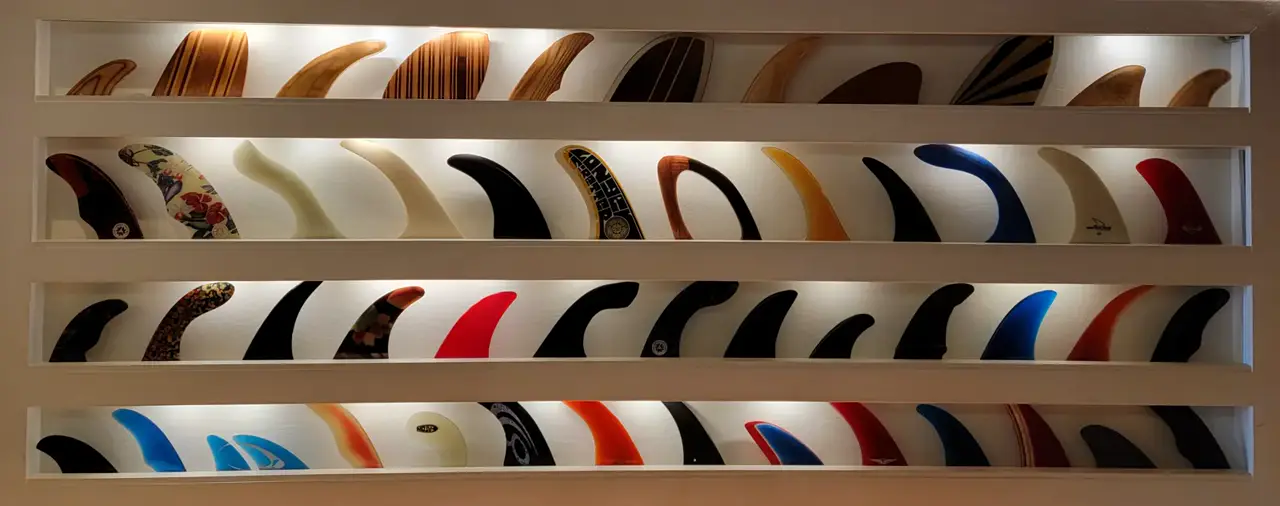
Fin choices are often neglected when preparing for cold water, yet fin flex alters drastically in colder seas. Traditional plastic or overly flexible composite fins can become brittle or lose their dynamic spring when water temperatures plunge into the 40s and 50s. Furthermore, thicker wetsuits demand stronger drive off your back foot to push through turns.
- Upgrade to Stiff Glass or Carbon Fins: Fiberglass, solid resin, and carbon-infused fins maintain their flex characteristics in low temperatures, delivering predictable recoil out of bottom turns.
- Upsize Your Template: If you run a Medium fin during the summer, stepping up to a Large template in your favorite thruster or quad set provides the added hold required to balance the momentum of your wetsuit-laden body.
- Twin + Trailer Setups: Running a small trailer fin behind a set of upright twins adds stability in unpredictable fall conditions without sacrificing effortless paddling speed.
To dive deeper into fin tabs, cant angles, and template dynamics, review our comprehensive Fin Systems Guide.
Pro Tip: Inspect your fin boxes and screw threads before autumn swell seasons ramp up. Cold salt water and sand accelerate galvanic corrosion on steel grub screws. Clean the threads and swap worn screws to prevent stripped boxes during a mid-session adjustment.
Cold Water Surfboard Guide: Regional Tactics & Great Lakes Fall Surfing
Autumn does not look the same everywhere. Depending on where you paddle out, your equipment priorities should adapt accordingly:
The Pacific Northwest & Northern California
Fall brings raw, heavy northwest groundswells accompanied by water dropping into the low 50s. Here, step-up hybrids with rounded pin tails and reinforced glassing are mandatory to punch through thick ocean chop and hold a line across big open faces.
The Northeast & Mid-Atlantic
Hurricane season collides with early winter northeasters, generating hollow, fast-moving beach breaks. You need fast-paddling grovelers for soft September peelers and pulled-in swallow-tails with medium entry rockers for dredging October shorebreak barrels.
The Great Lakes / Midwest Autumn Surfing
Autumn is prime time for lake surfers. Fresh water is significantly less buoyant than ocean saltwater, and short-period windswell lacks the raw energy of open-ocean groundswell. Midwest surfers should look at autumn beginner surfboards or wide hybrid funboards adding 5 to 8 liters above normal saltwater baselines. Generous widths (21" to 22.5") and dead-flat entry rockers make all the difference when clawing into short-period Lake Michigan wind waves.
Cold-Water Maintenance: Protecting Your Investment
Dropping temperatures introduce distinct maintenance challenges. Storing your board in an unheated garage or inside a freezing vehicle can damage the blank's internal structure. EPS (epoxy) blanks expand and contract under severe thermal swings, which can lead to micro-delaminations if water has penetrated through hairline cracks.
- Inspect for Spider Cracks: Check your tail corners and nose before paddling out into cold waters. Cold water seeping into a foam core rots the stringer rapidly.
- Immediate Repairs: If you ding your board on autumn boulders or cobblestone points, fix it before paddling back out. Cold water is dense and saturates foam faster under hydrostatic pressure. Consult our Repair Center for step-by-step DIY epoxy and polyester repair workflows.
- De-Wax and Strip Regularly: Old, dirty wax picks up ocean grit and loses its tack in cold seas. Strip your deck completely each September, apply a fresh crosshatch basecoat, and layer a dedicated sub-60°F cold wax on top.
To learn more about the heritage of surfboard materials and how construction evolved from heavy redwood timbers to modern cold-water composites, explore our dive into Surfing History.
Pro Tip: Never use boiling water to remove wax from an EPS/epoxy surfboard. The rapid thermal shock can cause the air inside the expanded polystyrene foam to bubble the lamination outward, instantly ruining your board's deck contour.
Final Takeaways for Autumn Progression
Do not let chilly conditions and heavy rubber sideline your progression. By following these fall surfboard recommendations, sizing up your volume to counteract wetsuit weight, and picking shapes that marry early entry with sharp tail control, you can turn autumn into your most productive surfing season of the year.
Ready to match your exact weight, height, and home break to the ultimate fall setup? Calculate your specs on our Volume Calculator, explore our Board Finder Quiz, or chat directly with our the board finder to find your perfect autumn stick today.
Frequently Asked Questions
How much volume should I add to my surfboard for fall surfing?
Most surfers should add 2 to 3 liters of volume for autumn surfing in 3/2mm or 4/3mm wetsuits. If you are surfing in extreme cold (5/4mm wetsuit with boots, gloves, and hood) or surfing freshwater lakes like Lake Michigan, you should add 4 to 6 liters above your standard warm-water volume to compensate for reduced buoyancy and paddle drag.
Are soft-top surfboards good for fall waves?
Yes, modern high-performance hybrid soft-tops (like the Mick Fanning Beastie or Catch Surf Heritage) make excellent autumn beginner surfboards. They deliver maximum float, resist dings from rocky fall shorebreaks, and cushion the impact if you slip in cold water, making them ideal for developing surfers throughout the autumn months.
What surfboard tail shape works best in autumn surf?
Round tails and swallow tails are ideal fall wave surfboard picks. Swallow tails provide early glide and speed across mushy, soft sections common in early autumn, while round and pin tails maintain grip, hold, and smooth rail-to-rail transitions when powerful, long-period groundswells arrive.
Does cold water affect surfboard fin performance?
Yes. Cold water stiffens standard flexible plastic fins, sometimes making them feel dead or brittle. Upgrading to high-grade fiberglass or carbon-base fin templates ensures consistent flex, responsive recoil, and the necessary drive to push through turns despite the added weight of autumn wetsuits.