Future of Surfboard Design: 2025-2030 Evolution
The future of surfboard design is rapidly evolving, driven by advanced analytics and sustainable practices. We'll explore how emerging surfboard designs, materials, and technology are redefining performance and accessibility for surfers worldwide. Discover the innovations shaping the next wave of boards.
Surfboard Life · June 15, 2026 · 11 min read
The future of surfboard design is poised for a significant leap forward, blending cutting-edge computational fluid dynamics (CFD) with a renewed focus on sustainability and user experience. Over the next 5-7 years, surfers can anticipate boards that are not only faster and more responsive but also more eco-conscious and tailored to individual needs. This guide delves into the specific emerging surfboard designs, materials, and technological advancements that will shape the lineups from 2025 to 2030, transforming how we ride waves.
For decades, surfboard shaping relied heavily on intuition and empirical feedback. While this artisan craft remains vital, the industry is increasingly integrating data-driven insights. This shift allows shapers to optimize designs with unparalleled precision, moving beyond trial and error to a predictive understanding of how design elements impact performance. The future of surfboard design isn't just about new shapes; it's about a holistic evolution involving materials, manufacturing, and a deeper understanding of the rider-board-wave dynamic.
The Dawn of Data-Driven Design: CFD and Simulation
The most profound influence on the future of surfboard design comes from computational fluid dynamics (CFD). Previously the domain of aerospace and F1 racing, CFD is now giving shapers unprecedented insights into how water interacts with a board's surface. "CFD simulations allow us to test hundreds of variations of rocker, concave, and outline before even cutting foam," explains a prominent shaper in a recent interview. "This drastically reduces development time and refines performance outcomes."
How CFD is Revolutionizing Surfboard Performance
CFD software simulates water flow around a surfboard, revealing areas of drag, lift, and turbulence. This granular data helps designers understand the subtle impact of rail shape, bottom contours, and rocker lines. For example, a CFD analysis might show that a slight adjustment to the tail rocker reduces drag by 3% at planing speeds, translating to noticeable speed gains for the surfer. This scientific approach quantifies performance, allowing for objective improvements.
Pro Tip: Understanding the basics of surfboard hydrodynamics can help you choose a board. Concepts like planing area and entry rocker directly influence speed and maneuverability. Dive deeper into these terms with our Surfboard Anatomy guide.
Beyond basic drag, CFD helps optimize fin placement and cant angles, which are critical for drive and turn initiation. Shapers can now experiment with radical bottom contours that might have seemed counter-intuitive before simulation. This data-driven approach is leading to highly specialized boards for specific wave types and riding styles, truly unlocking the potential for peak performance.
Emerging Surfboard Designs: Beyond the Traditional Thruster
While the thruster remains a foundational design, the next era will see a proliferation of innovative and modern surfboard shapes. These aren't just fads; they're performance-oriented designs emerging from both data analysis and the desire for diverse surfing experiences for surfers of all levels, from beginners to pros. (worldsurfleague.com often showcases these experimental shapes on their tour).
Asymmetrical Surfboards: Tailored Performance
Asymmetrical boards are no longer a niche curiosity; they're gaining traction. These designs feature a differing rail line and tail shape from heel side to toe side, optimizing for the distinct mechanics of backhand and forehand turns. For instance, the heel-side rail might be straighter for drive, while the toe-side is curvier for tighter arcs. "My asymmetrical board feels like two different boards in one, perfectly tuned for my frontside and backside," says a pro surfer in Stab Magazine (stabmag.com). This personalized approach offers a clear advantage in critical sections of the wave.
Mid-Length Hybrids: Versatility and Flow
The mid-length renaissance continues, evolving into sophisticated mid-length hybrids. These boards blend the paddle power and glide of a longer board with the maneuverability of a shorter one. Expect to see refined outlines, often incorporating elements like channels, step-tails, or unique fin clusters (e.g., twin + trailer, or quads). They're highly versatile, making them an excellent choice for a wide range of conditions and skill levels. If you're pondering a versatile board, our Board Finder Quiz can help match you with the perfect hybrid.
Foil-Influenced Outlines and Bottom Contours
The burgeoning popularity of hydrofoiling is subtly influencing traditional surfboard design. We're seeing foil-influenced outlines with wider noses and tails for stability at lower speeds, and bottom contours designed to maximize lift and minimize wetted surface area. While not foiling, these boards aim to create an incredibly fast and frictionless sensation, reminiscent of flying over the water. These are emerging surfboard designs that push the boundaries of glide and speed.
Mini-Simmons and Planing Hulls: Extreme Efficiency
The influence of the Simmons legacy continues with advanced mini-simmons and wider planing hulls. These boards prioritize speed and glide in weaker surf, harnessing minimal wave energy. Modern interpretations incorporate sophisticated bottom contours (concaves, spiraled vee) and rail designs (soft 50/50 rails shifting to hard edges) to inject more performance and control into these extremely efficient shapes. This represents a significant shift towards maximizing fun in less-than-ideal conditions, expanding the range of waves that feel exciting. Learn more about board categories in our Board Types Guide.
Surfboard Flex and Performance: The Untapped Potential
Historically, surfboard flex was a somewhat uncontrolled variable. The future of surfboard design will see flex engineered with precision, becoming a key component of performance. The way a board bends and recoils underfoot significantly impacts speed, drive, and the feeling of connection to the wave.
Engineered Flex Patterns
Advanced materials and manufacturing techniques are enabling shapers to design specific flex patterns. This might involve strategic carbon reinforcement, stringerless EPS with specialized laminations, or even torsion-specific designs. "A board that flexes correctly acts like a spring, loading and releasing energy through turns," explains an industry expert. This orchestrated flex can allow for tighter arcs, more explosive pop off the lip, and a smoother ride through chop. Think of it as tuning the suspension on a high-performance vehicle.
Pro Tip: Pay attention to how your current board flexes. A board that feels overly stiff might be less forgiving, while one that's too flexy could feel spongy. Finding the right balance for your weight, style, and wave conditions is key. Our Fin Systems Guide also touches on how different fin flexes contribute to overall board feel.
Stringerless Constructions and Carbon Reinforcements
Stringerless EPS (Expanded Polystyrene) blanks, combined with epoxy resins and carefully applied carbon fiber or other composites, are becoming commonplace for engineered flex. Carbon strips, patches, or even full carbon wraps can be strategically placed to create zones of stiffness or flex. This allows for a strong, light board that still offers a lively feel. These constructions are defining the future of surfboard flex and performance.
Comparison: Traditional PU vs. Modern EPS/Epoxy with Engineered Flex
| Feature | Traditional PU/PE (Polyurethane/Polyester) | Modern EPS/Epoxy (Engineered Flex) | |-------------------|----------------------------------------------------|------------------------------------------------| | Feel | Damp, smooth, classic "connected" feel | Lively, poppy, responsive, more spring-like | | Flex | Organic, less controlled, often softer over time | Engineered, predictable, tuned for performance | | Weight | Generally heavier | Lighter, often significantly so | | Durability | Good impact resistance, can ding easily | Stronger against impact, less prone to pressure dents | | Responsiveness| Good, but can feel sluggish in weaker waves | Excellent, creates more speed and drive | | Eco-Footprint | Higher VOCs, non-recyclable | Often uses bio-resins, more recyclable blanks |
Sustainable Surfboard Materials: The Green Wave
Environmental responsibility is no longer optional; it's a driving force in the future of surfboard design. The industry is actively seeking and adopting sustainable surfboard materials, aiming to reduce its carbon footprint and reliance on petroleum-based products. This is one of the most exciting aspects of the evolution, driven by consumer demand and a genuine desire from shapers to protect the oceans they cherish. Surfline highlights this shift in ethical manufacturing (surfline.com).
Bio-Resins and Bio-Foams
Epoxy resins with a high bio-content (derived from plants like soy or agricultural waste) are replacing traditional petroleum-based resins. Similarly, bio-foams made from algae or recycled plastics are emerging as viable, high-performance alternatives to traditional PU and EPS blanks. These innovations do not compromise performance; in fact, many shapers report that certain bio-resins offer improved flex characteristics and strength. These pioneering materials are rapidly changing the landscape of surfboard construction.
Natural Fibers and Recycled Composites
Beyond resin and foam, natural fibers like flax, hemp, and basalt are being used as reinforcements, offering comparable strength-to-weight ratios as fiberglass or carbon fiber, but with a significantly lower environmental impact. Recycled carbon fiber scraps from aerospace industries are also being repurposed into surfboard laminations, closing the loop on valuable materials. These advancements are vital for creating genuinely sustainable surfboard materials.
Closed-Loop Manufacturing and Repairability
Forward-thinking brands are exploring closed-loop manufacturing processes, where old boards can be recycled into new ones. Design for disassembly and improved repairability are also key. "Making boards that last longer and can be easily repaired is a huge step towards sustainability," notes an expert at a repair workshop. For practical advice on extending your board's life, visit our Repair Center.
AI and Personalization: The Bespoke Board Experience
The integration of artificial intelligence is another fascinating aspect of the future of surfboard design. AI tools can analyze vast datasets of wave conditions, rider preferences, and board performance to suggest highly personalized designs. This goes beyond simple volume calculators (Volume Calculator); it’s about a board fine-tuned for your exact weight, height, skill level, local wave types, and even riding style.
Pro Tip: Even without AI, understanding your personal surfing profile is crucial. Do you prefer speed, maneuverability, or stability? What are your local wave conditions typically like? Use these answers to inform your board choices. Our the board finder can provide personalized recommendations based on your input now.
Generative Design and Machine Learning
AI-powered generative design algorithms can explore millions of design permutations, identifying optimal shapes that human shapers might never conceive. Machine learning models, fed with data from real-world surfing sessions (e.g., GPS speed, turn angles from smart fins), can refine these designs even further. This iterative process of simulation, testing, and refinement will lead to hyper-optimized, modern surfboard shapes.
The Virtual Shaper: Ordering Your Custom Board
Imagine inputting your body metrics, typical wave descriptions, and desired performance characteristics into an online interface. AI then generates a few optimal board designs for you to choose from, complete with detailed CFD performance predictions. This virtual shaper experience will make custom boards accessible to a wider audience, moving beyond the traditional shaper-client interaction, though that personal touch will always be valued. This level of personalization will redefine board purchasing.
The Evolution of Fins and Fin Systems
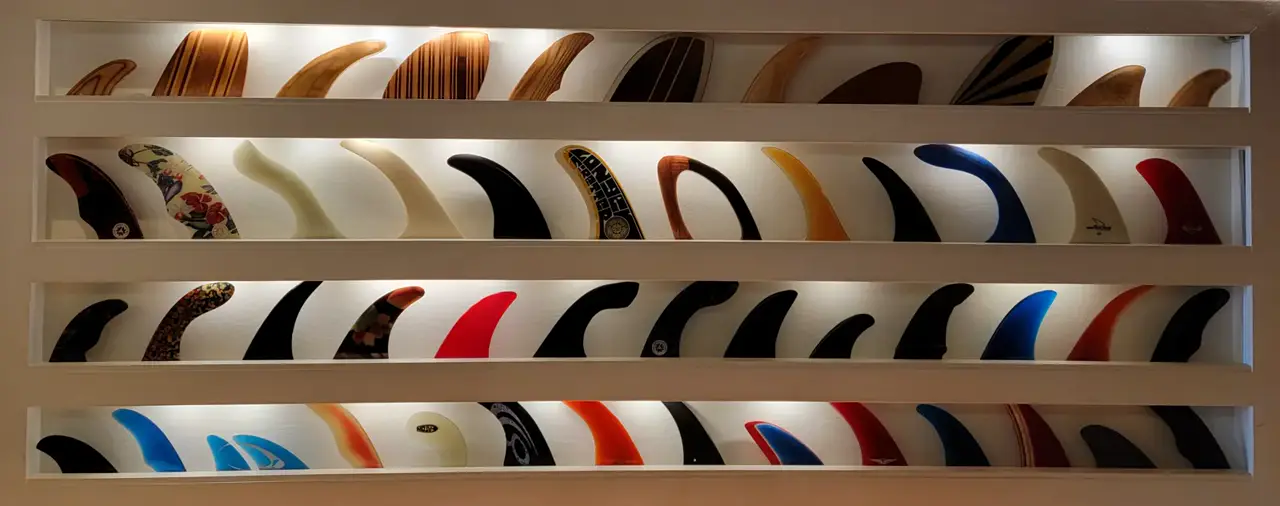
Fin design continues to evolve in lockstep with board shapes. The future of surfboard design also includes dynamic and adaptable fin systems.
Active Fin Systems
Research is underway into active fin systems that can adjust their shape or camber mid-ride, perhaps via piezoelectric materials or micro-servos, to optimize performance for different sections of the wave or turning radius. While still in early development, this represents a radical leap in dynamic control, offering real-time adjustments that could revolutionize maneuvers. This technology would push the boundaries of surfboard flex and performance even further.
Refined Hydrofoil Fins
For traditional surfboards, advancements in hydrofoil fins will continue. These fins are designed to generate lift and reduce drag more efficiently than traditional flat foils, contributing to increased speed and drive. New materials and manufacturing tolerances will enable even more precise and performance-enhancing fin profiles. Remember to explore different fin setups with our Fin Systems Guide.
Conclusion: Riding the Wave of Innovation
The future of surfboard design is incredibly exciting, promising a new era of performance, sustainability, and personalization. From data-driven CFD optimization to the widespread adoption of sustainable surfboard materials, the boards of 2025-2030 will be smarter, greener, and more finely tuned to the individual surfer than ever before. Emerging surfboard designs like asymmetricals and mid-length hybrids will offer diverse riding experiences, while engineered surfboard flex and performance will unlock new levels of speed and control. The integration of AI and advancements in materials are transforming the shaping bay into a high-tech lab, yet the core thrill of riding a wave remains timeless. Are you ready to embrace the next generation of boards?
Frequently Asked Questions (FAQ)
Q1: Which specific emerging surfboard designs are most likely to dominate lineups over the next 3-5 years for average surfers?
A1: For average surfers, expect to see a surge in refined mid-length hybrids and modern planing hulls (like advanced mini-simmons). These designs prioritize paddle power, glide, and versatility, making them highly enjoyable across a broader range of wave conditions and skill levels without sacrificing performance.
Q2: How do new materials and layups like bio-resins and stringerless tech change flex and durability?
A2: New materials like bio-resins often offer improved flex characteristics, allowing shapers to engineer more lively and responsive boards without compromising strength. Stringerless EPS constructions, often combined with carbon reinforcement, allow for controlled flex patterns, providing a springier feel and greater pop, while often being more ding-resistant than traditional PU.
Q3: Can insights from CFD be simplified for everyday surfers choosing a board?
A3: Absolutely. While CFD is complex, its outputs translate to key design principles: efficient outlines for speed, specific bottom contours for lift and control, and tailored rocker lines for maneuverability. Everyday surfers can benefit by understanding these fundamental relationships and choosing board features optimized for their local waves and preferred style, which our Learn to Surf and Board Types Guide detail.
Q4: Will sustainable surfboards compromise performance?
A4: No, the goal of sustainable surfboard materials is to match or exceed the performance of traditional boards. Ongoing research and development are creating bio-resins, bio-foams, and natural fiber reinforcements that offer comparable or superior strength-to-weight ratios, flex characteristics, and durability, ensuring that going green doesn't mean sacrificing your ride.
Q5: How will AI impact the custom board ordering process?
A5: AI will democratize custom boards. By analyzing your body metrics, surfing style, and local wave data, AI will generate highly personalized board designs with predictive performance. This will provide unprecedented insights into how specific dimensions and features will perform for your unique profile, streamlining the selection process and making custom boards more accessible and precise than ever before.