Longboard vs Funboard: Your Perfect Surfboard Match
Choosing between a longboard vs funboard is a crucial step for surfers of all levels. This comprehensive guide and interactive quiz will help you understand the core differences and find the ideal surfboard for beginners or progressing riders, ensuring you catch more waves and accelerate your surfing journey. Learn which board best suits your style and surf conditions.
Surfboard Life · May 23, 2026 · 12 min read
Longboard vs funboard: Which is better for you? The answer largely depends on your skill level, local wave conditions, and personal surfing goals. A longboard offers unmatched stability and paddle power, making it ideal for absolute beginners and small, gentle waves, while a funboard provides a fantastic balance of buoyancy and maneuverability, perfect for intermediate surfers looking to progress beyond the basics. This guide will walk you through the nuances of each, helping you make an informed decision.
Choosing the right surfboard is arguably the most critical decision a surfer makes, especially when navigating the bustling marketplace of shapes and sizes. For many, the initial choice boils down to a longboard vs funboard. These two categories represent excellent entry points and progression vehicles in the surfing world, yet they cater to distinct needs and aspirations. Understanding their differences is key to unlocking your potential in the water. We'll delve into the specifics, offering practical advice and data-driven insights to help you determine your ideal ride. This isn't just about picking a board; it's about choosing the right tool to enhance your wave-catching ability and overall enjoyment. If you're pondering a new surfboard for beginners or looking to upgrade, our comprehensive surfboard comparison will illuminate the path.
Understanding the Longboard: The Ultimate Wave-Catcher
Longboards, typically 9 feet or longer, are the venerable elders of the surfboard family. Their substantial length, width, and volume translate directly into unparalleled stability and paddle power, making them the quintessential surfboard for beginners. This design philosophy prioritizes ease of catching waves and effortless glide, even in the smallest, weakest swells. You'll often see longboarders gracefully cruising down the line in conditions where other board types struggle to even get going. For a deeper dive into how volume impacts performance, check out our Volume Calculator.
Key Characteristics of a Longboard:
- Length: Generally 9'0" and up, often reaching 10'0" or more.
- Width: Wider than most other board types, contributing to stability. Typically 22" to 24"+.
- Thickness: Thicker, providing more buoyancy and floatation.
- Nose: Often a rounded, wide nose, which increases paddle power and nose-riding potential.
- Tail: Can vary from square to pin or squash, but generally wider than performance shortboards.
- Rocker: Flatter rocker line for speed and glide in smaller waves.
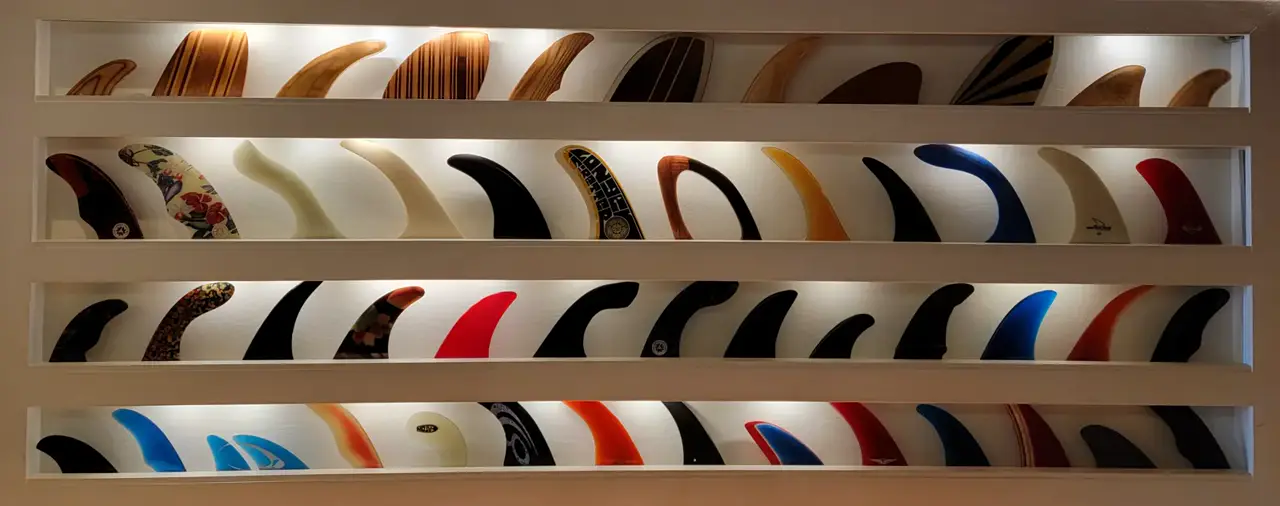
- Fins: Most commonly single fin setups, 2+1 (single fin with two side bites), or thruster configurations. Learn more about their impacts in our Fin Systems Guide.
Pros of Longboards:
- Exceptional Stability: Easier to stand up and maintain balance.
- Unmatched Paddle Power: Catches waves with minimal effort, even on flat sections. This is a huge advantage for novices and in less-than-ideal conditions.
- Early Wave Entry: You can catch a wave before it even breaks, providing a longer ride.
- Ideal for Small Waves: Excels in knee-to-waist high surf, which is where many beginners start.
- Classic Style: Offers a unique, graceful surfing style, including nose riding (walking to the front of the board). (Source: Surfer Magazine) A rich history surrounds this board type; explore it in our Surfing History section.
Cons of Longboards:
- Difficult to Maneuver: Their length makes sharp turns and radical maneuvers challenging.
- Transportation/Storage: Cumbersome to carry, transport, and store.
- Crowd Factor: Can be difficult to navigate crowded lineups and duck dive (go under a breaking wave).
- Less Challenging in Large Surf: While you can ride bigger waves, longboards are not designed for critical, high-performance surfing.
Pro Tip: When selecting your first longboard, choose one with slightly more volume than you think you need. Extra volume makes paddling and catching waves significantly easier, accelerating your learning curve. Consult our Volume Calculator for a precise recommendation based on your weight and experience.
Differentiating the Funboard: The Swiss Army Knife of Surfing
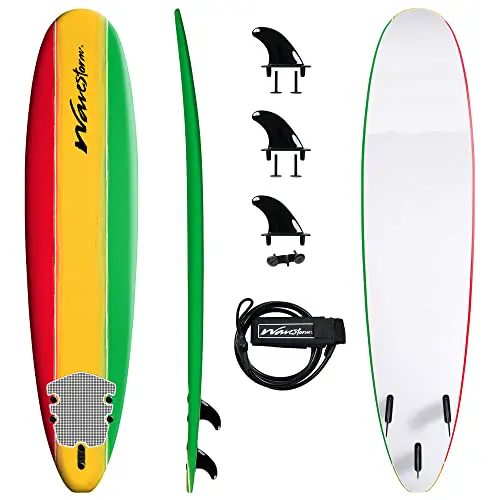
Often called a mini-mal (short for mini-Malibu) or an egg, a funboard typically ranges from 6.5 to 8.5 feet in length. It strikes a fantastic balance between the stability and paddle power of a longboard and the maneuverability of a shortboard. This makes it an excellent choice for surfers who have mastered the basics on a longboard and are ready to advance their skills, or for those who want a versatile board that performs well in a wider range of conditions. If you're transitioning out of the absolute surfboard for beginners phase, a funboard guide is essential reading.
Key Characteristics of a Funboard:
- Length: Generally 6'6" to 8'6".
- Width: Moderate width, narrower than a longboard but wider than performance shortboards, often 20" to 22".
- Thickness: Good thickness for buoyancy, but less than a longboard.
- Nose: Rounded or semi-pointed nose, offering a blend of paddle power and easier turning.
- Tail: Often a round, squash, or swallow tail for versatility.
- Rocker: Moderate rocker, allowing for some performance maneuvers while retaining good glide.
- Fins: Most commonly thruster (3 fins) or quad (4 fins) setups, offering versatility and drive. See our Fin Systems Guide for more details.
Pros of Funboards:
- Versatility: Performs well in a broader range of wave sizes and types, from small rollers to head-high surf.
- Improved Maneuverability: Easier to turn and control compared to a longboard, allowing for more dynamic surfing.
- Good Paddle Power: Still offers decent paddle power and wave-catching ability, more than a shortboard.
- Progression Friendly: An ideal stepping stone for surfers looking to improve their turns and transition to shorter boards.
- Easier to Transport: More manageable to carry and fit in vehicles than a longboard.
Cons of Funboards:
- Less Stable than a Longboard: Requires more balance and technique, especially for true beginners.
- Less Paddle Power than a Longboard: You'll need to work a bit more to catch waves, particularly smaller ones.
- Not as Performance-Oriented as a Shortboard: While maneuverable, it's not designed for the radical, vertical surfing of a high-performance board.
Pro Tip: When moving from a longboard to a funboard, consider starting with a board at the longer end of the funboard spectrum (e.g., 7'6" to 8'0"). This provides a smoother transition in terms of paddle power and stability, gradually allowing you to adapt to a shorter, more responsive ride. For an individualized recommendation, take our Board Finder Quiz.
Longboard vs Funboard: A Direct Comparison for Your Surf Journey
Understanding the nuanced differences between a longboard vs funboard is crucial for making an educated choice. This surfboard comparison breaks down how each board type performs across key surfing metrics, directly addressing the common question of 'which is better' by focusing on suitability rather than inherent superiority. Experienced shapers often stress that the 'best' board is always the one that matches the surfer's current skill and local wave conditions.
| Feature | Longboard | Funboard | | :----------------- | :-------------------------------------------- | :----------------------------------------------------------- | | Length | 9'0" + | 6'6" - 8'6" | | Volume | Very High (e.g., 60-90+ Liters) | Medium to High (e.g., 35-55 Liters) | | Stability | Excellent | Good | | Paddle Power | Exceptional | Good | | Wave Catching | Easiest, especially small waves | Easy to Moderate, versatile in various conditions | | Maneuverability| Low | Medium | | Ideal Skill | Beginner, Cruising, Soul Surfing | Intermediate, Progressive, All-arounder | | Wave Type | Small, gentle, mushy waves; point breaks | Varied: small to head-high, beach breaks, point breaks | | Transportation | Difficult (bulky) | Easier (more compact) | | Typical Cost | Generally higher due to size and materials | Mid-range |
The Impact of Rider Weight and Height
The choice between a longboard vs funboard is significantly influenced by a surfer's physical attributes. A heavier or taller individual will generally benefit from more volume, making a longboard a more forgiving choice initially. For example, a 200lb surfer might find a 9'6" longboard with 75+ liters of volume much more stable than an 8'0" funboard with 50 liters. Conversely, a lighter surfer might find a longboard too cumbersome and quickly gravitate to the responsiveness of a funboard. Our Volume Calculator provides personalized recommendations based on these factors, ensuring you don't end up on an undersized or oversized board. Pro surfers at the World Surf League (WSL) often adjust their board volume dramatically, even for shortboards, depending on wave power and their physical conditioning (Source: World Surf League).
Which Performs Best in Overhead Waves?
While longboards can ride overhead waves, they are not designed for performance in them. Their length and flat rocker make taking late drops difficult and sharp turns challenging. A funboard, with its more moderate rocker and greater maneuverability, will generally perform much better in overhead conditions. It allows for easier duck diving, quicker directional changes, and a more controlled ride on steeper faces. For powerful, critical waves, however, neither a longboard nor a funboard will match the performance of a true shortboard.
Ideal Transition Timeline from Longboard to Funboard
There's no set timeline, as progression is highly individual. However, an experienced instructor at a reputable surf school (like those found near popular beginner spots often highlighted by Surfline) might suggest transitioning to a funboard once a surfer can consistently: paddle out unassisted, catch unbroken waves, stand up quickly and consistently, and ride down the line (trim) both left and right. This typically takes anywhere from a few months to a year of consistent surfing. For most, the natural progression leads from a longboard to a funboard, then potentially to a hybrid or shortboard, depending on their desired surfing style. Our Learn to Surf guide offers more insights into accelerating your progression.
The Funboard Guide: Your Next Step in Surfing Progression
So, you've mastered the basics on a longboard and are looking for something that offers more carve and control? Congratulations, you're ready for the funboard! This funboard guide will help you understand why this board type is so popular for intermediate surfers and how to choose the right one. A funboard excels in allowing you to start linking turns, riding faster, and experiencing a more dynamic ride.
Experienced shapers like Bob McTavish, pioneers of the shortboard revolution, often speak of the funboard as bridging the gap between traditional longboarding and high-performance surfing. It offers a taste of both worlds, making it incredibly rewarding for those progressing. A well-chosen funboard will feel responsive underfoot, yet stable enough to paddle into waves with ease.
Choosing Your Funboard:
- Length: As mentioned, if transitioning, lean towards the longer end (7'6"-8'6"). If you're lighter or already comfortable on a mini-mal, you can go shorter (6'6"-7'0").
- Volume: Ensure there's enough volume for comfortable paddling, but not so much that it hinders turning. Our Volume Calculator is invaluable here.
- Fins: Most funboards come as thrusters (3 fins) or 2+1 setups. Thrusters offer a balanced mix of drive and maneuverability. Some prefer quads for more speed and hold in hollower waves. Refer to our Fin Systems Guide for more on fin choices.
- Construction: Foam core boards are great for durability and affordability. Epoxy (EPS foam with epoxy resin) offers lighter weight and responsiveness, while PU (polyurethane foam with polyester resin) provides a classic feel and flex. For general board care and material insights, visit our Surfboard Anatomy and Repair Center sections.
Pro Tip: Don't be afraid to rent or borrow a few different funboard sizes and shapes before committing to a purchase. This hands-on experience is the best way to understand what feels right for your surfing style and local waves.
The Best Surfboard Quiz: Find Your Perfect Match Today!
Still unsure whether a longboard vs funboard is right for you? Our best surfboard quiz is designed to cut through the confusion and provide a personalized recommendation. This interactive tool considers your weight, height, skill level, and wave preferences to suggest the ideal board category and even volume range. No more guessing – get a data-driven choice for your next ride!
Take Our Board Finder Quiz Here: Board Finder Quiz
This quiz goes beyond a simple surfboard comparison; it acts as a virtual shaper, offering advice tailored to your specific needs. It's like having an experienced pro surfer guide you through the process, ensuring you avoid common pitfalls that can hinder progression. We've incorporated insights from rider testimonials and real-world progression scenarios to make our recommendations as accurate as possible. For instance, a surfer consistently catching green waves but struggling with turns will be steered towards a performance-oriented funboard, while someone primarily focused on learning the basics in gentle surf will be shown the benefits of a high-volume longboard. This is the closest you'll get to a personalized consultation without stepping into a surf shop, and it even helps address cost considerations by streamlining your search. For any further detailed questions, our the board finder is always ready to help!
Conclusion: Your Ideal Ride Awaits
Choosing between a longboard vs funboard is a pivotal decision that directly impacts your surfing experience. Whether you're an absolute beginner seeking stability and ease of wave catching, or an intermediate surfer striving for greater maneuverability and progression, there's a perfect board for you. Longboards offer a timeless glide and unparalleled paddle power, making them the ultimate surfboard for beginners and soul surfers. Funboards provide a versatile bridge, offering a taste of performance without sacrificing too much stability, making them an excellent choice for improving your turns and exploring different wave conditions. Remember, the 'best' surfboard isn't a universally fixed item but rather the one that aligns perfectly with your skill, aspirations, and the waves you frequent. Utilize our resources, from the funboard guide to the best surfboard quiz, to confidently select your next board and elevate your surfing journey.
Ready to catch more waves and accelerate your progression? Take our Best Surfboard Quiz today at Surfboard Life's Board Finder Quiz and discover your perfect longboard or funboard match!
Frequently Asked Questions (FAQ)
Q1: Is a funboard good for absolute beginners?
A1: While a longboard is generally recommended for absolute beginners due to its superior stability and paddle power, a funboard can be ridden by beginners who are quicker learners or have athletic backgrounds, especially if they start with a longer, higher-volume funboard (8'0"+).
Q2: How much does a good longboard or funboard cost?
A2: The cost of a new longboard or funboard can vary significantly based on brand, construction (PU vs. Epoxy), and special features. Expect to pay anywhere from $600 to $1200+ for a new quality board. Used boards are often a more affordable option.
Q3: Can I learn to nose ride on a funboard?
A3: While possible on some longer, wider funboards, nose riding is primarily a longboarding technique. The length, flat rocker, and wide nose of a traditional longboard are specifically designed to facilitate walking to the nose and maintaining stability there.
Q4: What's the main benefit of choosing a funboard over a longboard once I can consistently catch waves?
A4: The main benefit of a funboard is significantly improved maneuverability. It allows you to start executing proper turns, cutbacks, and potentially even some basic carves, opening up a whole new dimension of surfing that isn't easily achievable on a longboard.
Q5: What kind of waves are ideal for a funboard?
A5: Funboards are incredibly versatile and perform well in a wide range of conditions, from knee-high to head-high waves. They excel in softer, more forgiving waves like those at many beach breaks or gentler point breaks, but can still provide an enjoyable ride in more powerful, overhead conditions.