Spring Surf Quiver Essentials: Transition Smart, Surf Stronger
Transitioning your *surf quiver* from winter to spring demands smart choices to maximize wave count and enjoyment. This guide unpacks the *spring surf quiver essentials*, focusing on adapting to shoulder season conditions with the right board, fin, and wetsuit setups for every region, ensuring you surf stronger as the seasons shift.
Surfboard Life · May 28, 2026 · 13 min read
Spring Surf Quiver Essentials: Transition Smart, Surf Stronger
Transitioning your surf quiver from the heavy-hitter boards of winter to the more playful shapes of spring allows surfers to adapt to changing conditions and maximize their wave count. The spring surf quiver essentials typically involve lighter, faster boards with slightly less volume than winter setups, optimized for decreasing swell size, fluctuating winds, and warming waters, preparing you for the coming summer while still handling lingering cool-weather bumps.
Spring, often dubbed the shoulder season, presents a unique challenge and opportunity for surfers. After the raw power of winter swells, spring brings a mix of lingering groundswells, wind chop, and the early whispers of summer's gentler waves. This volatile period necessitates a thoughtful re-evaluation of your equipment. For many, winter meant reaching for step-ups or thicker, more volume-rich boards to paddle into bigger, colder surf. Now, as the days lengthen and the water gradually warms, it's time to consider a spring surfboard setup that provides versatility and fun across a broader range of conditions. This comprehensive guide will help you craft the perfect spring surf quiver essentials to thrive in the season's evolving surf.
Understanding the Spring Surfing Environment
To build an effective spring surf quiver essentials lineup, you first need to understand the unique characteristics of spring conditions. Unlike stable summer or winter patterns, spring is a dynamic transitional period.
- Swell Changes: Winter's consistent, powerful groundswells typically dwindle. Spring often sees more disorganized swells from storms further out, mixed with local windswell. Average wave height tends to decrease, with more frequent days of waist to head-high surf.
- Wind Patterns: Spring can be notoriously windy, with unpredictable shifts from offshore to onshore. This leads to choppier conditions and often necessitates boards that can handle a bit of bump and offer speed through flatter sections.
- Water Temperature Fluctuations: This is perhaps the most significant environmental shift. While air temperatures rise quickly, water temperatures lag. This means many regions experience cold water that slowly warms, requiring appropriate wetsuit thickness – often a 3/2mm or 2mm shorty, possibly even a 4/3mm early in the season, depending on your regional spring surfboards location. Check Surfline's regional water temperature charts (surfline.com) for real-time data.
- Crowds: As the weather improves, so do the crowds. A versatile board helps you snag more waves and navigate busier lineups.
- Sandbar Shifts: Winter storms often reconfigure sandbars. Spring offers a chance for new, exciting banks to form, which can favor specific board designs for performance.
Experienced shapers emphasize versatility for this season. "Spring is about having a board that works when it's still pumping a bit, but also when it drops to a playful peel," notes a veteran California shaper. This means finding a balance between performance and paddle power, often favoring boards that are easier to ride in mixed conditions.
The Minimal Spring Surf Quiver: Efficiency & Fun
For surfers on a budget or with limited storage, a minimal spring surf quiver is entirely achievable without sacrificing enjoyment. The goal is to select 1-2 boards that can cover the majority of spring scenarios. This approach focuses on versatility and maximizing your time in the water.
The Two-Board Spring Setup:
-
"The Reliable Performer" (Your Daily Driver): This is your workhorse. It should be a board you're comfortable on in a wide range of conditions, from chest-high windswell to head-high clean lines. Think a performance shortboard, a hybrid, or a performance mid-length. It should have good paddle power but still allow for snappy turns. Its volume should be a slight step down from your thickest winter board, perhaps at your ideal daily driver volume, which you can calculate using our Volume Calculator.
- Ideal Characteristics: Moderate rocker, balanced outline, typically a thruster or 2+1 fin setup. Aim for a board that can maintain speed in weaker surf but still hold a rail in punchier waves. This bridges the gap between your heavier winter boards and lighter summer shapes.
-
"The Fun Keeper" (Groveler/Small Wave Specialist or Mid-Length): For those days when the swell completely disappears, or the waves are just too weak for your daily driver, you need something to keep the stoke alive. This could be a modern fish, a groveler, or a playful longboard/mid-length. Your goal with this board is maximum wave count and speed in marginal conditions.
- Ideal Characteristics: Flatter rocker, wider nose and tail, often a larger surface area, and plenty of foam for easy paddling. Fin choices often include twin fins, quads, or a more performance-oriented single fin for mid-lengths. The added foam makes catching those smaller, inconsistent spring waves much easier, providing an excellent platform for practice and progression (check out our Learn to Surf guide for tips).
Shoulder Season Surfboard Guide: Key Board Types
A deeper dive into board types helps refine your shoulder season surfboard guide. While personal preference and local conditions are paramount, certain shapes inherently perform better in the variable conditions of spring.
1. The Performance Hybrid
- Why it works for Spring: Hybrids blend elements of shortboards and funboards, offering a fantastic balance of paddle power and performance. They typically have a wider nose and outline than a pure performance shortboard, making them excellent in mushy or weaker waves, but still feature enough rocker and rail to turn aggressively when conditions improve. This makes them central to any spring surfboard setup.
- Specs: Often ridden 2-4 inches shorter than your traditional shortboard, with slightly more width and thickness. This added volume (often 1-3 liters more than your performance shortboard) is key for spring's varied swell. For more info on board shapes, see our Board Types Guide.
- Fin Setup: Versatile thruster (3 fin) or 5-fin convertible (thruster or quad) for adapting to changing conditions. Our Fin Systems Guide can help you choose the right setup.
2. The Modern Fish
- Why it works for Spring: Fish surfboards excel in smaller, weaker waves due to their flat rocker, wider outline, and generous volume. They generate speed easily and are incredibly fun for drawing unique lines. Perfect for those clean, small spring days or when the wind cleans up a small windswell.
- Specs: Typically ridden 4-8 inches shorter than your shortboard, with significant width and thickness through the center and tail. Often comes with a swallow tail or a wider, blunter round tail. Learn about tail shapes in our Surfboard Anatomy guide.
- Fin Setup: Predominantly twin fin or quad fin setups, which provide maximum speed and maneuverability in weaker surf.
3. The Performance Mid-Length
- Why it works for Spring: Mid-lengths (6’6” to 8’0”) offer exceptional paddle power, making them wave-catching machines in crowded spring lineups or punchier days. They blend the glide of a longboard with the maneuverability of a shorter board, allowing for deep carves and trim lines. Ideal for regional spring surfboards in places with longer, peeling waves.
- Specs: Often ridden with a more refined rail and tail than a traditional longboard, allowing for more performance. Volume is key for paddle power, but not so much that it's unwieldy.
- Fin Setup: Single fin, 2+1, or even quad setups are common, each offering a different feel. A 2+1 setup provides versatility for varied conditions.
Pro Tip: Don't just swap board types; consider surfboard construction. For everyday spring conditions, a standard PU/polyester board is great. However, if you're looking for extra 'pop' or liveliness in smaller, weaker surf, an EPS/epoxy construction can offer a lighter, more buoyant feel that enhances speed generation. Many experienced shapers will recommend EPS for lighter conditions.
Optimizing Your Spring Surfboard Setup: Fins, Leash, and Wax
Beyond the board itself, a truly effective spring surfboard setup considers accessories that enhance performance and comfort during the shoulder season.
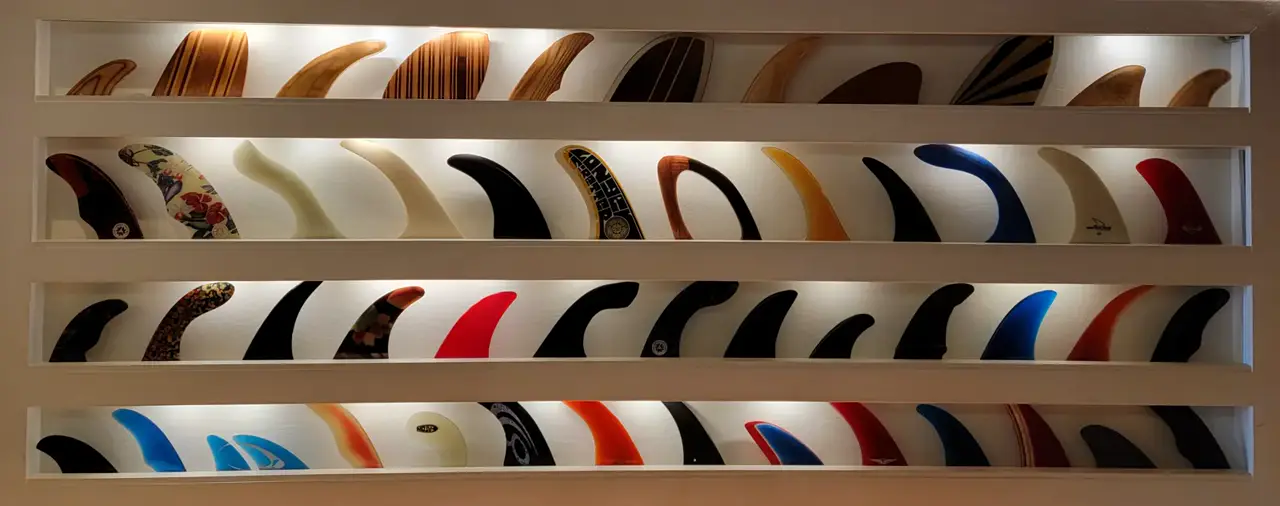
Fins: The Detachable Engine
Fins are perhaps the most underrated component of a quiver. Swapping fins can drastically alter a board's feel and performance, making one board suitable for a wider range of conditions.
- Spring Strategy: As wave power often decreases, consider slightly larger or more raked fins to maintain drive and hold. Alternatively, fin setups that promote speed, like twin fins or specialized quads, become excellent choices for smaller, weaker surf.
- Thruster vs. Quad vs. Twin:
- Thruster: The classic, balanced option. Great for all-around performance. Your go-to for most spring days.
- Quad: Excellent for generating speed in softer waves and providing hold in barrel sections. A great choice for hybrids and fish in spring conditions.
- Twin Fin: Pure speed and fun, but less controlled. Ideal for very small, clean days on a fish or retro shape. Perfect for playful surfing when the waves aren't demanding top-tier performance.
Leash: The Unsung Hero
While often overlooked, your leash choice makes a difference. As conditions moderate, you might opt for a lighter, thinner leash than your heavy-duty winter cord, reducing drag without compromising safety. "A lighter leash makes a surprisingly big difference on wave speed and how freely your board feels," says a pro surfer World Surf League (worldsurfleague.com).
Wax: Temperature Matters
Don't forget your wax! Using cold water wax in warm water conditions (or vice-versa) can ruin your grip. As water temperatures slowly climb in spring, you'll need to transition from cold to cool to potentially warm water wax over the season. A good rule of thumb is to check the water temp before each session and apply the appropriate base coat and top coat.
Regional Spring Surfboards: Adapting to Local Nuances
Understanding how spring manifests in different regions is crucial for building the perfect quiver. What works in Southern California might not be ideal for the Outer Banks of North Carolina or the chilly waters of Europe.
- Southern California (SoCal): Expect a mixed bag. Early spring can still get decent NW swells, but rapidly shifts to smaller, south-facing beach breaks. A performance hybrid or a classic shortboard combined with a modern fish makes for an excellent regional spring surfboards quiver. Focus on boards that excel in both punchy beach break and softer point/reef waves. You'll move from a 4/3mm wetsuit to a 3/2mm or even a 2mm short-sleeve fullsuit by late spring.
- East Coast (USA): Spring on the East Coast is notoriously fickle. You'll get lingering nor'easters bringing powerful, cold surf, interspersed with long flat spells and quick, punchy windswells. A high-volume shortboard or hybrid for bigger days, paired with a dedicated groveler or mid-length for smaller, softer surf, is essential. The water stays colder longer here, so a 4/3mm is viable into May, transitioning to a 3/2mm.
- Europe (e.g., France/Portugal): Similar to the East Coast, but often with more consistent, powerful groundswells early on. A performance shortboard and a reliable step-down or fish are key. The water remains cold for much of spring, so a good 4/3mm wetsuit is your friend for most of the season, potentially shifting to a 3/2mm in late spring. Read Stab Magazine (stabmag.com) for Euro-centric pro perspectives.
- Australia (e.g., NSW/QLD): Spring here (September-November) means transitioning from winter's consistent southern swells to more variable conditions. Warmer waters mean you're shedding rubber quickly. A versatile all-around shortboard and a fun, fast small-wave board (like a twin fin fish) will cover most bases for these regional spring surfboards.
Pro Tip: When considering regional variations, think about local wave dominant types. Is it mostly beach break, point break, or reef break? This influences desired rocker, outline, and fin setup. For personalized advice, consider using our the board finder.
Spring Quiver Transition Checklist
To ensure a smooth transition from your winter setup to your spring surf quiver essentials, follow this practical checklist:
- Doff the Winter Armor: Pack away your thickest wetsuit (5/4mm or 4/3mm for some regions), booties, gloves, and hood. Inspect them for damage and prepare them for storage or send them to a Repair Center if needed.
- Wetsuit Inventory: Assess your 3/2mm, 2mm full-suits, and short-sleeved or vest options. Ensure they are in good condition. Consider investing in a new spring suit if yours is worn out.
- Board Assessment: Clean all boards thoroughly. Inspect for dings, pressure dents, or delamination. Repair anything that needs attention. Look at your winter boards – are they too much for smaller spring waves? If so, consider selling or storing them.
- Volume Adjustment: If you primarily rode higher-volume boards in winter for paddle power in larger surf, spring is the time to slightly dial back your board's volume. A 1-2 liter drop in your daily driver can make a significant difference in responsiveness in smaller waves.
- Fin Check: Review your fin collection. Are they appropriate for the expected spring conditions? Do you have smaller, looser fins for weaker waves and more raked fins for drive? Clean out fin boxes. Our Board Finder Quiz can help you match board types to your skill and local conditions.
- Leash Swap: Switch out your heavy-duty winter leash for a lighter-duty spring/summer leash. Inspect for fraying.
- Wax Reload: Remove old, layered wax and re-wax with the appropriate base coat and spring-temp top coat.
- Sun Protection: Remember, spring sunshine can be intense. Stock up on reef-safe sunscreen and a good surf hat.
Pro Tip: Think Progression, Not Just Performance
Spring is an excellent time for skill development. With typically smaller, more forgiving waves than winter, it's a great opportunity to work on new maneuvers, try different lines, or simply increase your wave count. A slightly more forgiving board in your spring surf quiver essentials can aid this. Don't be afraid to try a mid-length if you typically ride shortboards, or experiment with a twin fin if you're a thruster loyalist. This open-minded approach makes the most of the season. "Experimentation in your quiver is key to unlocking new aspects of your surfing," advises a legendary shaper in Surfer Magazine (surfermag.com).
Conclusion: Embrace the Spring Shift
The transition from winter to spring surfing is a beautiful dance between changing conditions and evolving equipment needs. By thoughtfullycurating your spring surf quiver essentials, you're not just swapping boards; you're optimizing your ability to connect with the ocean in its most dynamic season. Whether you go for a minimal spring surf quiver or a more extensive shoulder season surfboard guide approach, focus on versatility, paddle power, and fun. Embrace the variety spring offers, and your sessions will undoubtedly be richer and more rewarding. Get ready to enjoy those longer, warmer days on the water. For more personalized recommendations, visit our Board Finder Quiz today and find your perfect spring ride!
Frequently Asked Questions (FAQ)
Q1: How many boards do I really need for a good spring surf quiver?
A1: For most surfers, 1-3 boards are ideal for a spring surf quiver essentials. A versatile daily driver (hybrid or performance shortboard) and a small-wave specialist (fish or groveler) will cover 80% of spring conditions. If you only have one, make it a high-volume performance shortboard or hybrid.
Q2: Should I use more or less volume in my boards for spring?
A2: Generally, you'll want slightly less volume than your winter boards but potentially more than your purest summer performance boards. Spring waves are often playful but can lack the raw power of winter swells, so a bit of extra foam (1-3 liters above your low-end performance volume) aids paddle power and speed generation in weaker surf. Our Volume Calculator can help you pinpoint your sweet spot.
Q3: What's the biggest mistake surfers make with their spring quiver?
A3: The biggest mistake is either sticking with their heavy-duty winter boards for too long, missing out on fun in smaller surf, or jumping too quickly to low-volume summer boards and struggling with paddle power in lingering powerful swells. Not adjusting fins or wetsuits for changing water temperatures is also a common oversight.
Q4: Are mid-lengths good for spring conditions?
A4: Absolutely! Mid-lengths are excellent for regional spring surfboards. Their increased paddle power makes catching the often inconsistent spring swells much easier, and their blend of speed and maneuverability makes them incredibly fun for drawing long lines and working on trim, especially in cleaner, peeling waves.
Q5: How do regional variations affect my spring board choices?
A5: Regions with colder water and stronger, later-season swells (like the Pacific Northwest or parts of the East Coast) may hold onto their more robust winter boards and thicker wetsuits longer. Warmer regions with quicker swell dissipation (like Southern California or Queensland) will transition to lighter, faster boards, and thinner wetsuits much faster. Always check local forecasts and water temperatures for your specific shoulder season surfboard guide.